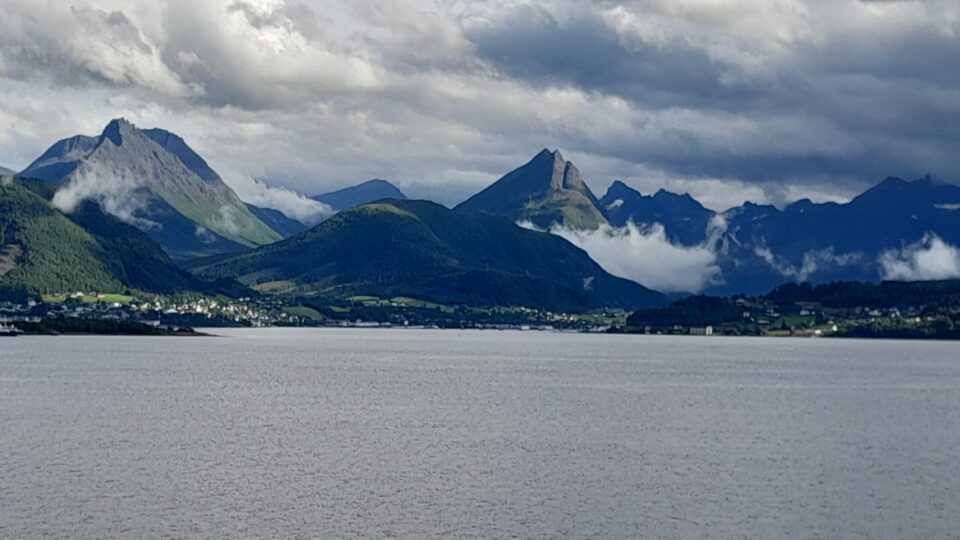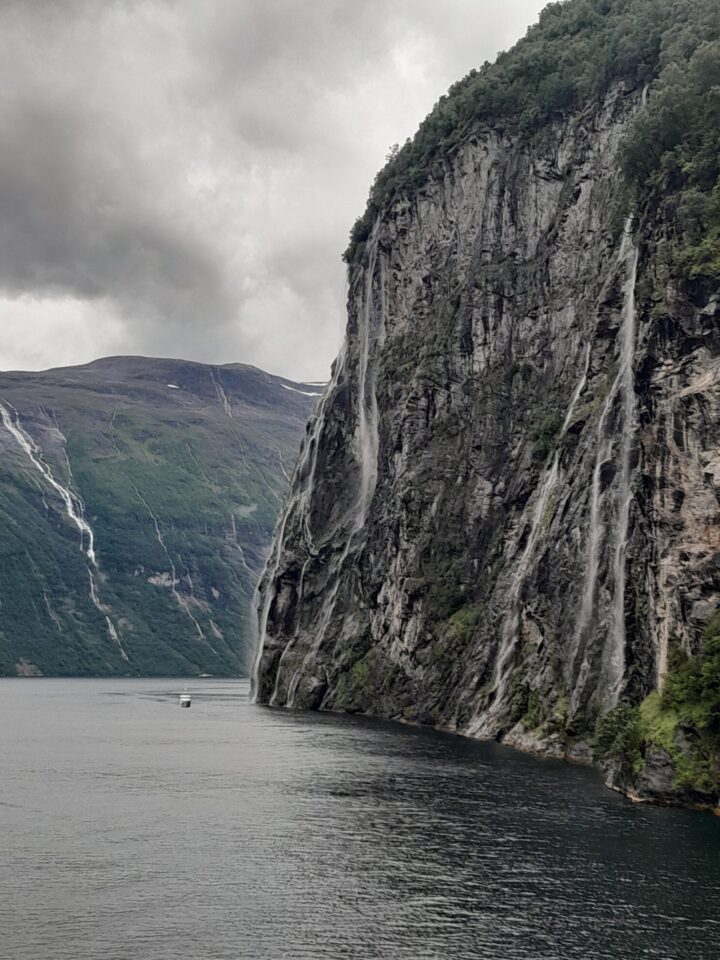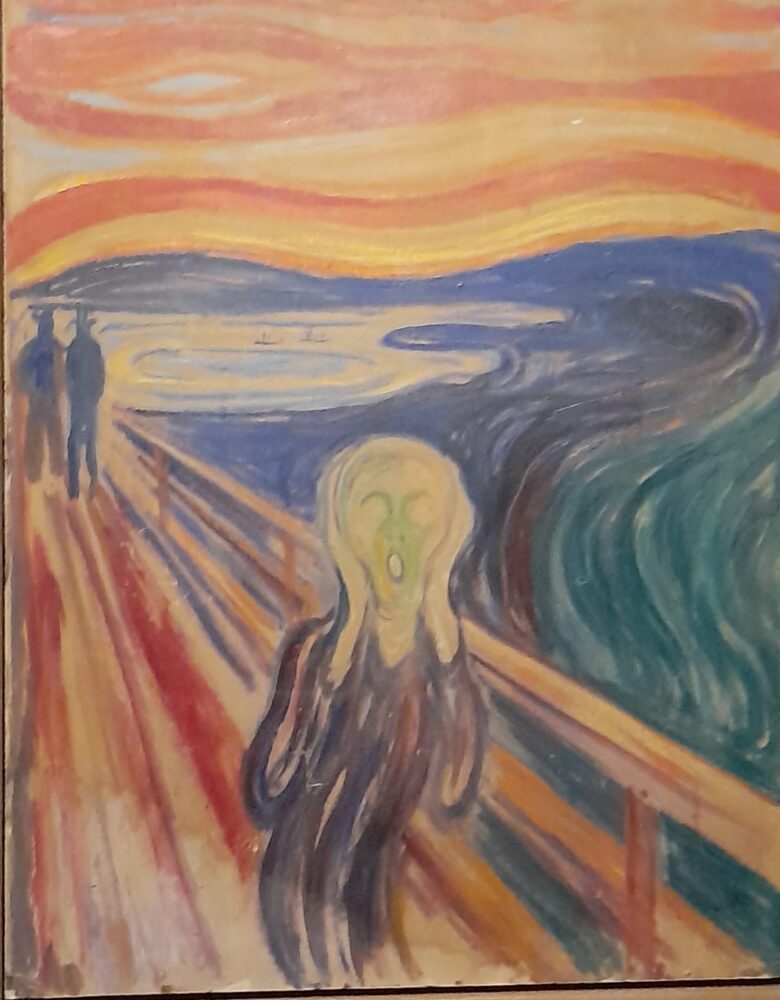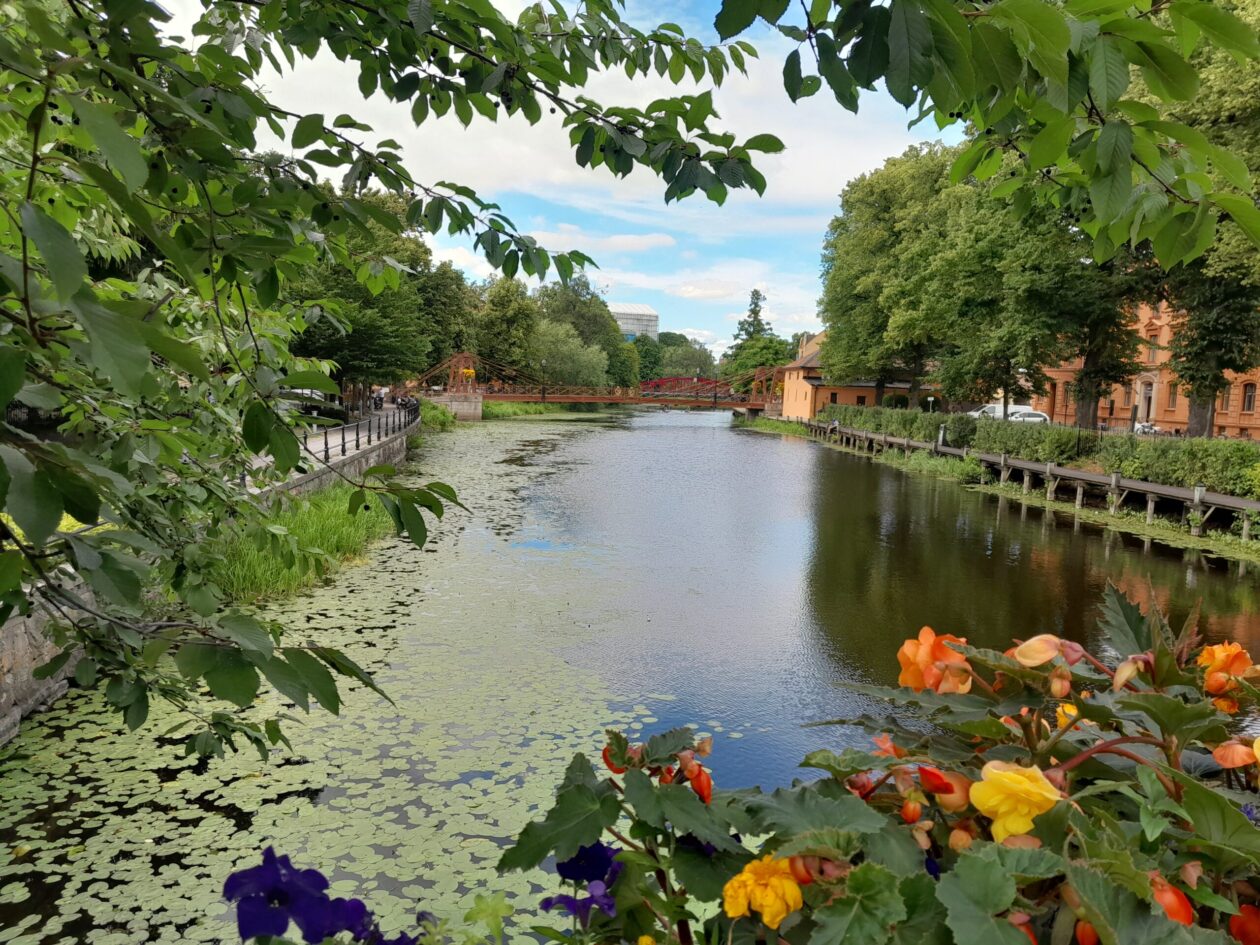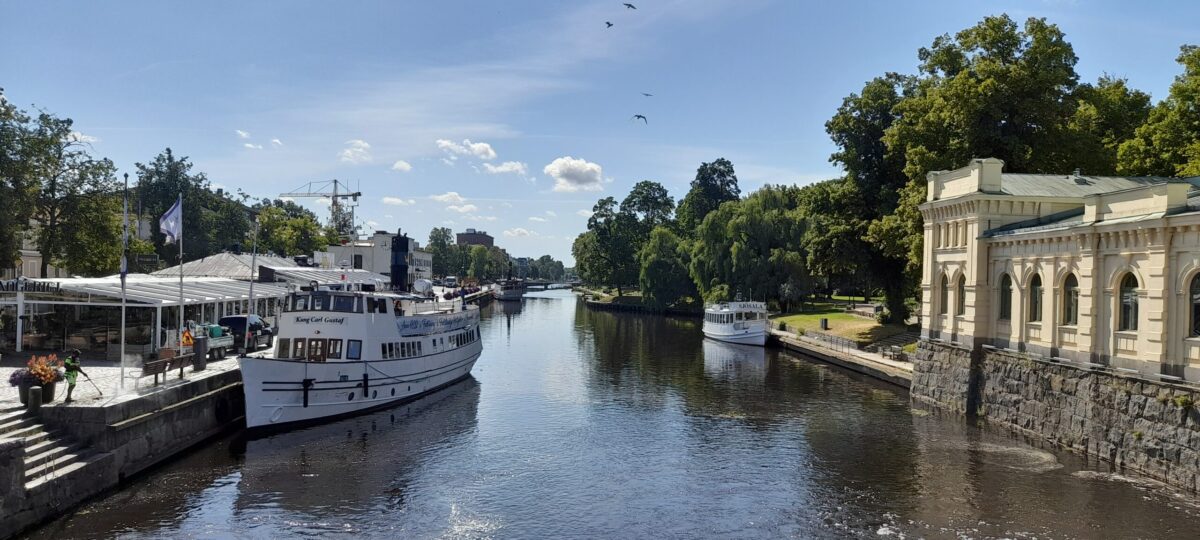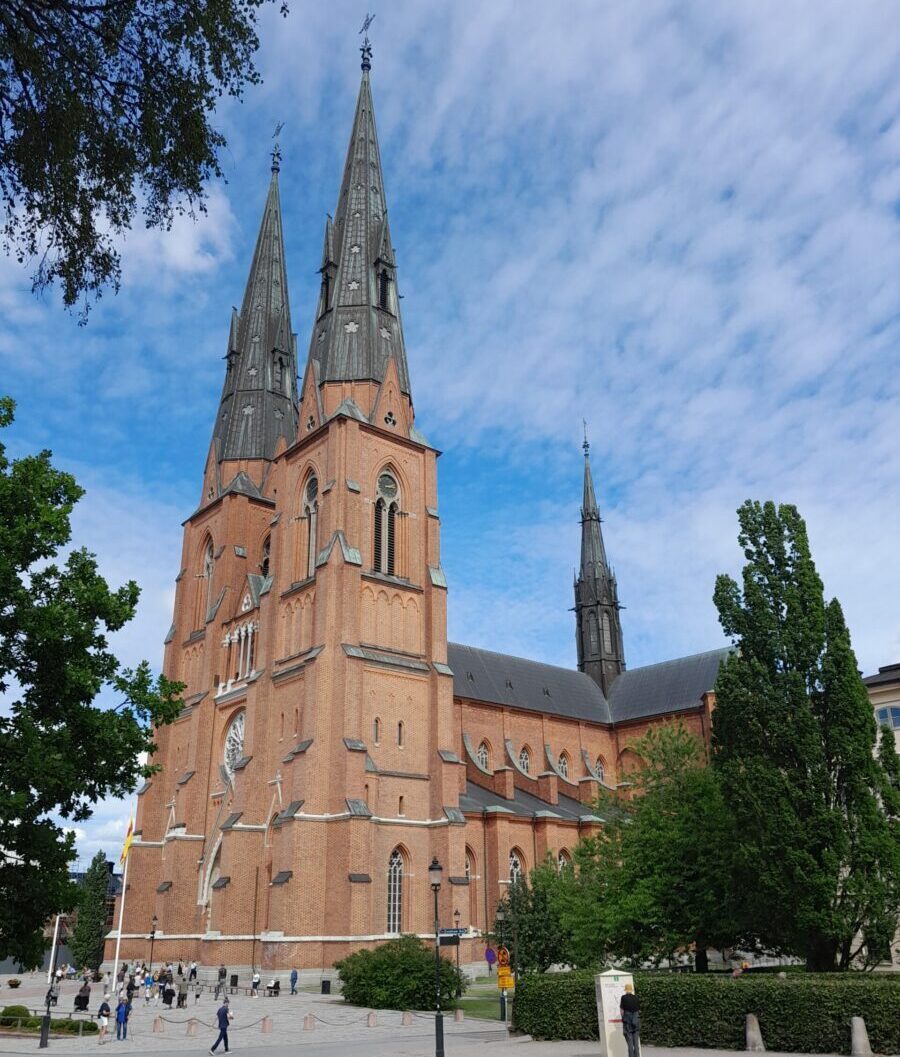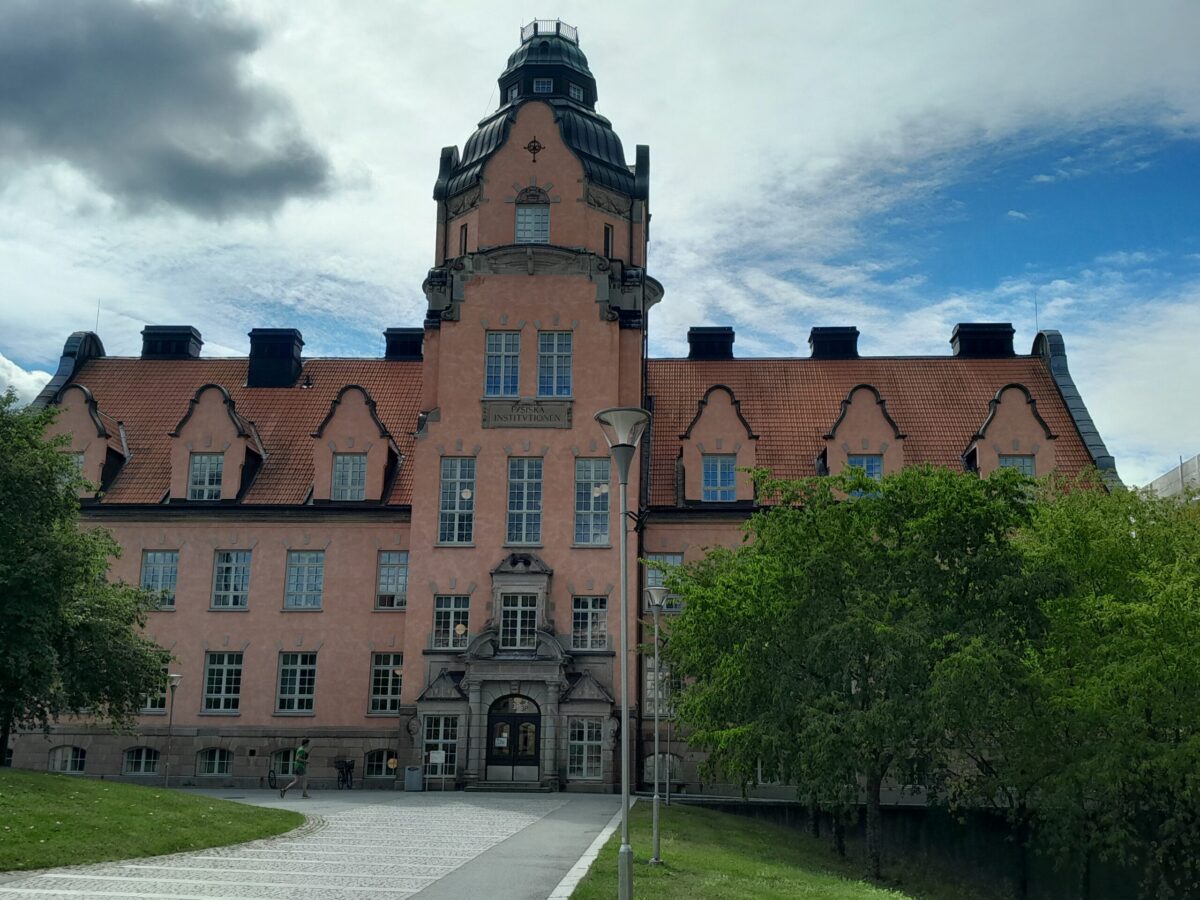
Lithuania 2025

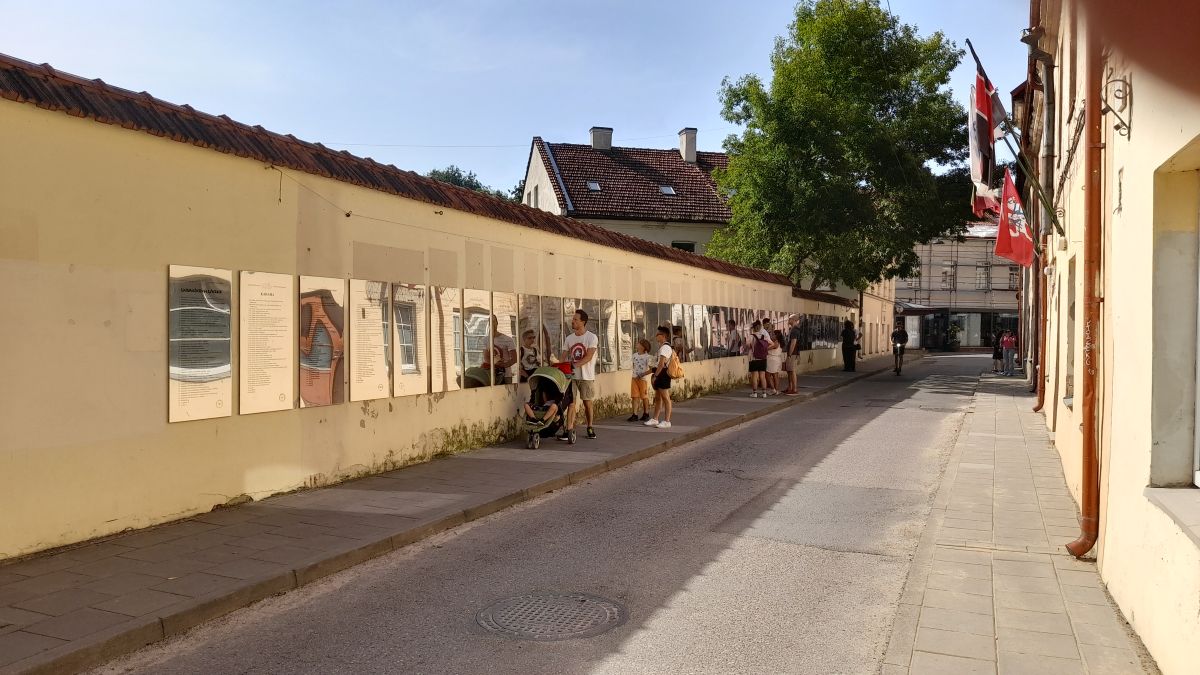
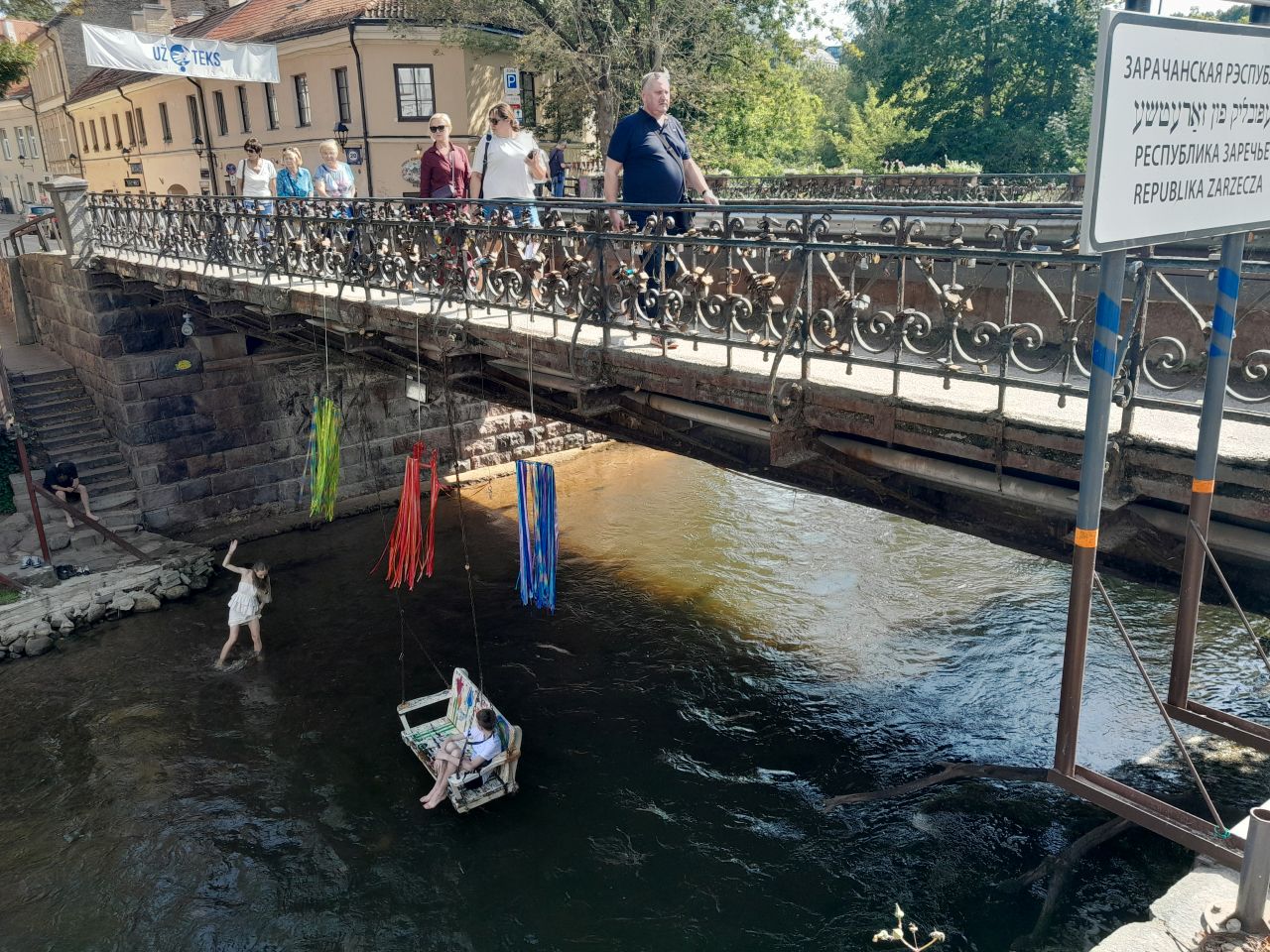
The Uzupis Constitution, posted on a wall in Uzupis in 43 languages

The Užupis Constitution terms:

1. Everyone has the right to live by the River Vilnele, and the River Vilnele has the right to flow by everyone.
2. Everyone has the right to hot water, heating in winter and a tiled roof.
3. Everyone has the right to die, but this is not an obligation.
4. Everyone has the right to make mistakes.
5. Everyone has the right to be unique.
6. Everyone has the right to love.
7. Everyone has the right not to be loved, but not necessarily.
8. Everyone has the right to be undistinguished and unknown.
9. Everyone has the right to idle.
10. Everyone has the right to love and take care of the cat.
11. Everyone has the right to look after the dog until one of them dies.
12. A dog has the right to be a dog.
13. A cat is not obliged to love its owner, but must help in time of nee.
14. Sometimes everyone has the right to be unaware of their duties.
15. Everyone has the right to be in doubt, but this is not an obligation.
16. Everyone has the right to be happy.
17. Everyone has the right to be unhappy.
18. Everyone has the right to be silent.
19. Everyone has the right to have faith.
20. No one has the right to violence.
21. Everyone has the right to appreciate their unimportance.
22. No one has the right to have a design on eternity.
23. Everyone has the right to understand.
24. Everyone has the right to understand nothing.
25. Everyone has the right to be of any nationality.
26. Everyone has the right to celebrate or not celebrate their birthday.
27. Everyone shall remember their name.
28. Everyone may share what they possess.
29. No one can share what they do not possess.
30. Everyone has the right to have brothers, sisters and parents.
31. Everyone may be independent.
32. Everyone is responsible for their freedom.
33. Everyone has the right to cry.
34. Everyone has the right to be misunderstood.
35. No one has the right to make another person guilty.
36. Everyone has the right to be individual.
37. Everyone has the right to have no rights.
38. Everyone has the right to not to be afraid.
(39. Do not defeat.
(40. Do not fight back.
(41. Do not surrender.

Some argue that the last three are mottos, not rights.

It was written in July 1998 by Thomas Chepaitis (Minister of Foreign Affairs of  Uzhupis) and Romas Lileikis (President of Uzhupis)

It was just a dream some of us had.

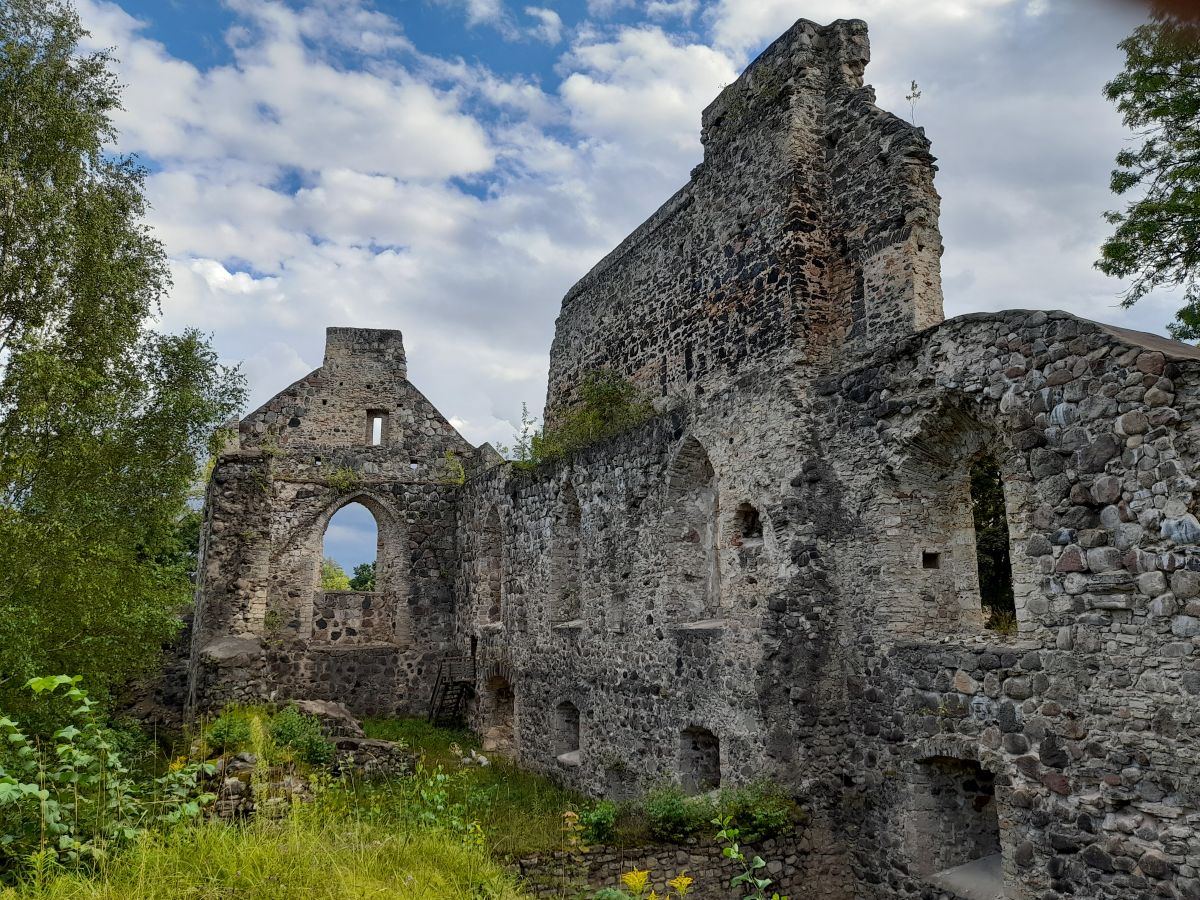
Uzupis is a neighborhood and self-proclaimed independent republic within Vilnius, Lithuania. When Lithuania gained independence from the Soviet Union, freedom of thought and expression were celebrated throughout the Baltics. In Vilnius, part of its manifestation was the emergence of, shall we say, a bohemian area of the city across the Vilian River from Old Town. In the 90s, artists and free thinkers congregated there. Many remain, though the area ha become gentrified now. The rents are too high for most artist-types. The studios have mostly become chic galleries, and the coffee shops have mostly become tourist hangouts. Still, some of the flavor remains, and it’s a nice walk along the river.
We spent the last week of our Baltic’s trip in Lithuania. We broke up the bus ride from Riga, Latvia to Vilnius with a stopover in Siauliai, where there is a UNESCO Intangible Cultural Heritage site called the Hill of Crosses. The Hill of Crosses is important to Lithuanians as a place of hope, peace and national identity through hundreds of years of occupation off and on from medieval times until the dissolution of the Soviet Union. Thousands of crosses are erected there.
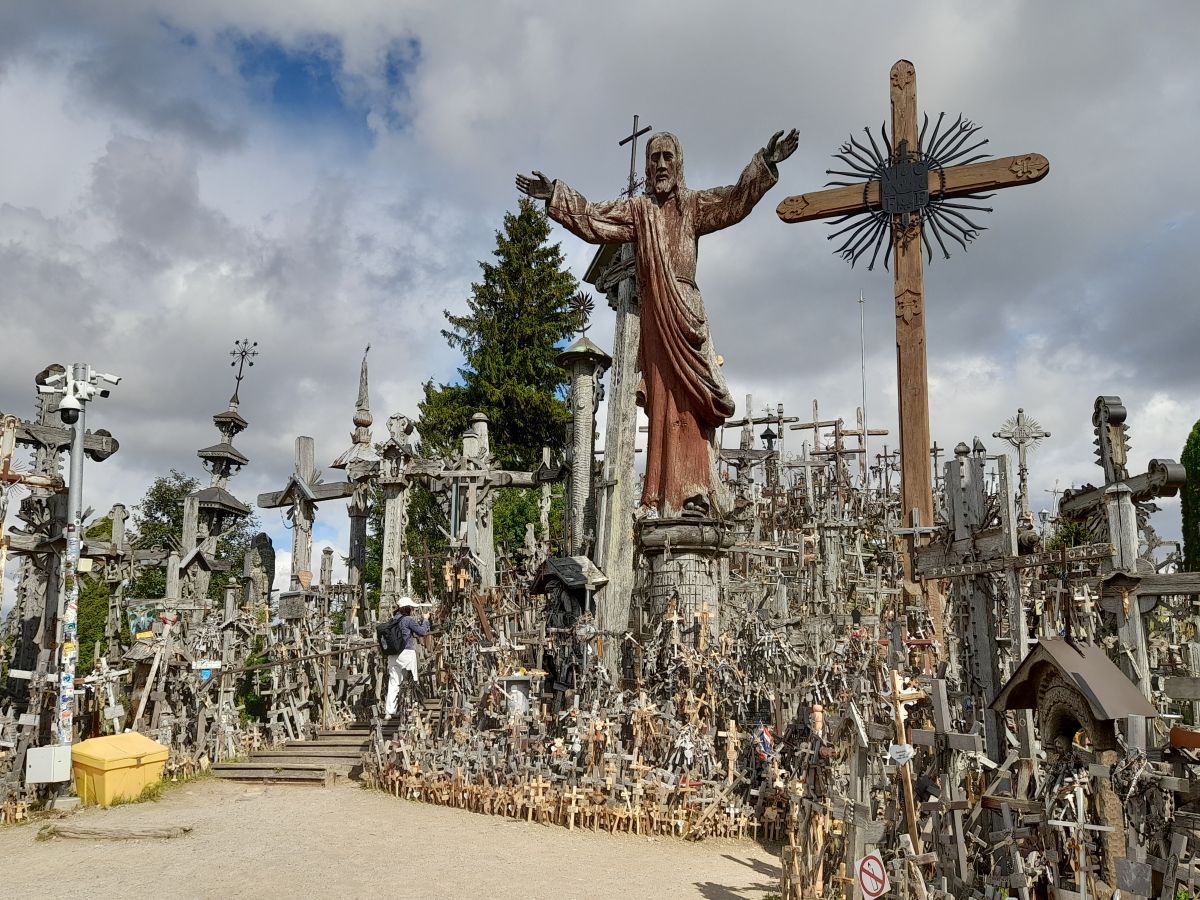
Hill of Crosses, Siauliai
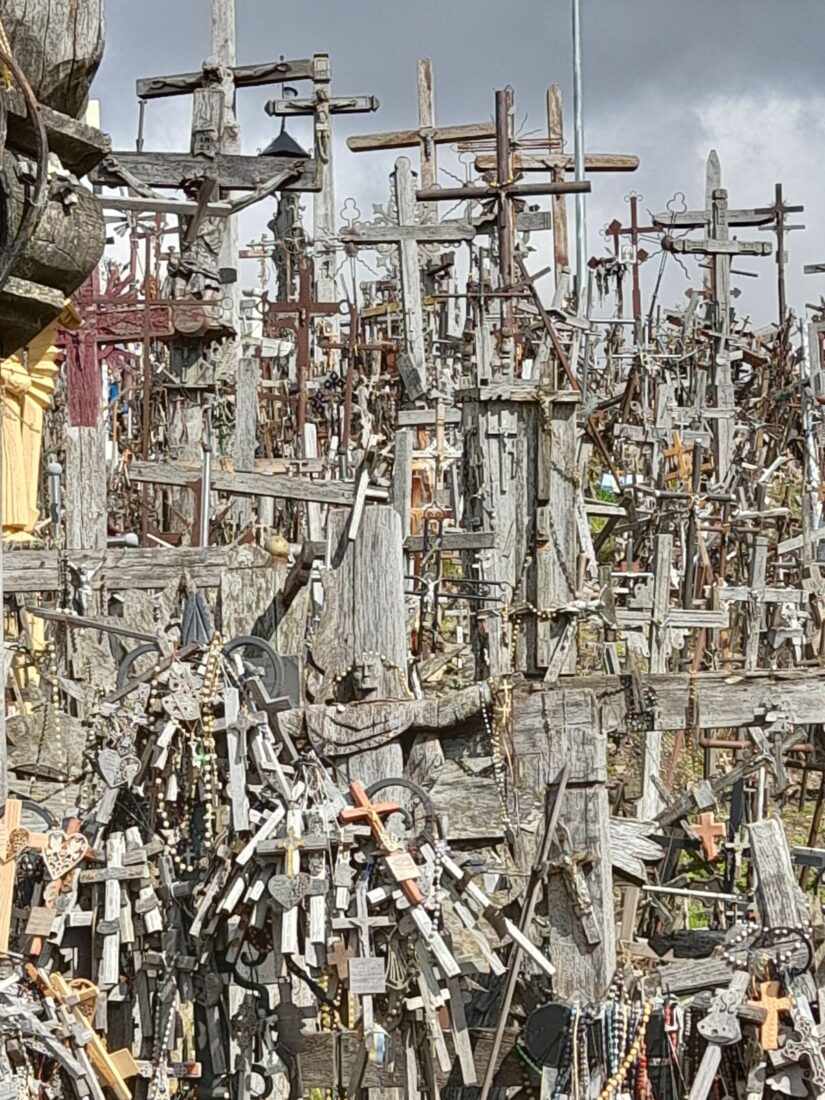
Hill of Crosses, Siauliai

In Vilnius, we took it easy again, spending a lot of time in Old Town, seeing the old buildings, churches and museums, like we did in Riga and Tallinn. All that is great for rubbernecking. If you want to learn about all the history, google it. Suffice it to say, that as small as the area of the Baltics is, Estonia, Latvia and Lithuania are quite different. For its part, Lithuania is more like Poland than the other two countries, as it was part of the Polish-Lithuanian Commonwealth from the 16th century till it was taken over by czarist Russia at the end of the 18th century. Before that, it was its own kingdom for a hundred years or so. The food is very like I remember from visiting Poland in 1989, though a lot better now that it’s in the European Union. Sausages, borscht, beet soup, sauerkraut, vinegary coleslaw, cabbage rolls, meat/potato/veggy pies, every kind of potato dishes. The latkes and potato dumplings are great.
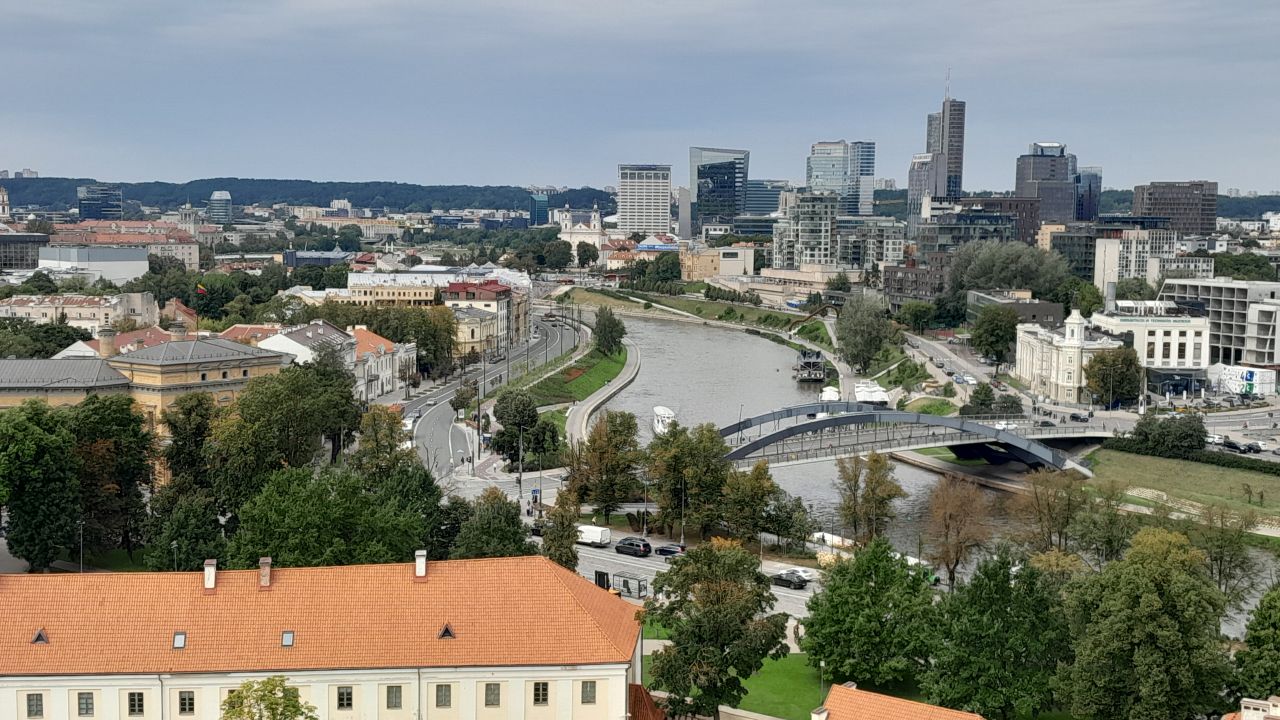
Overview of Vilnius

Speaking of Latkes, there were 30,000 Jews in Vilnius before the Nazi occupation, during which 95% of them died or were killed.
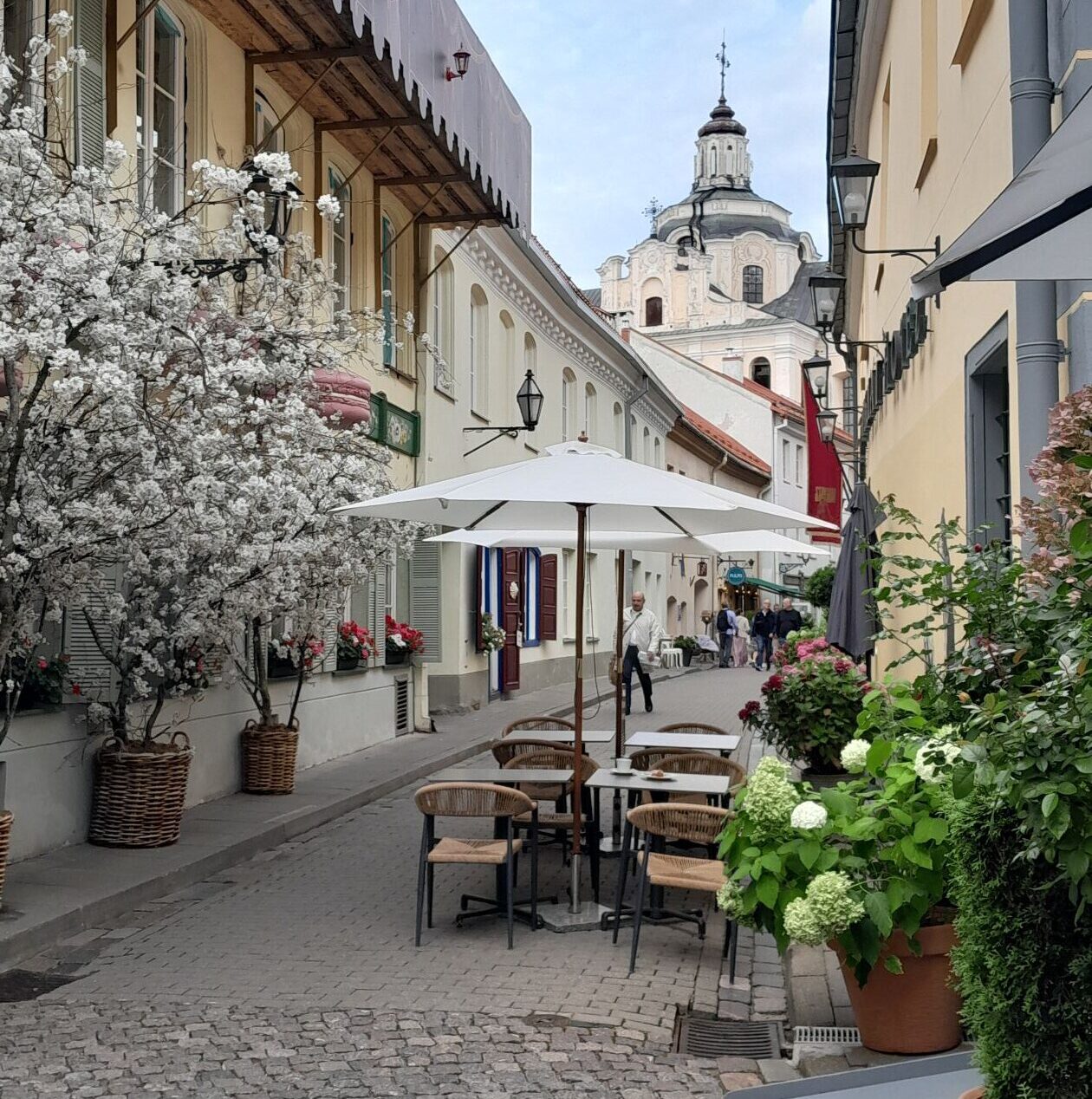
Street in what used to be the Jewish Quarter
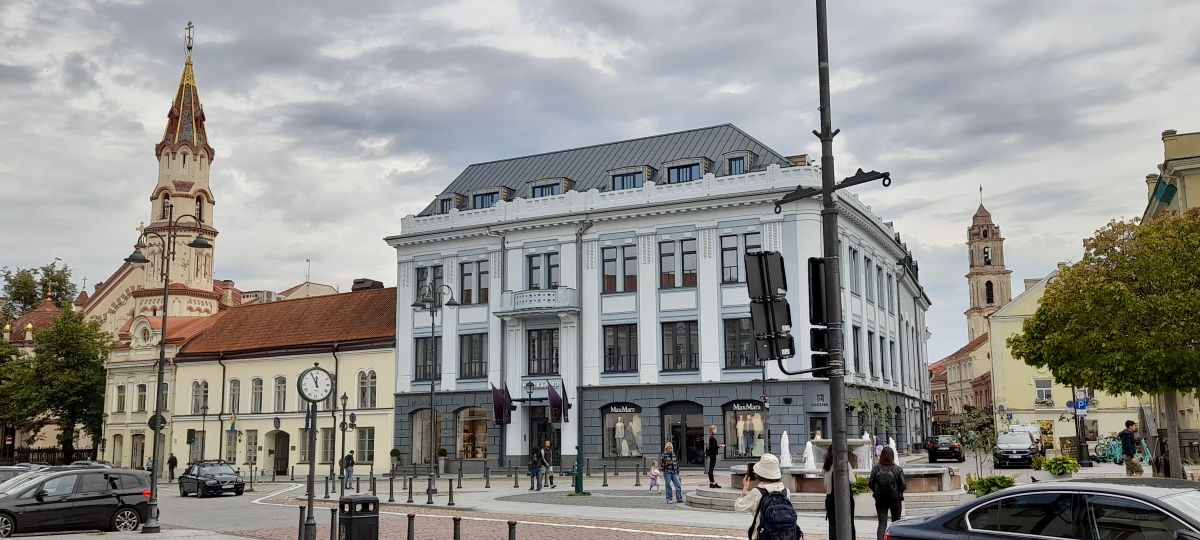
Characteristic block in Old Town Vilnius
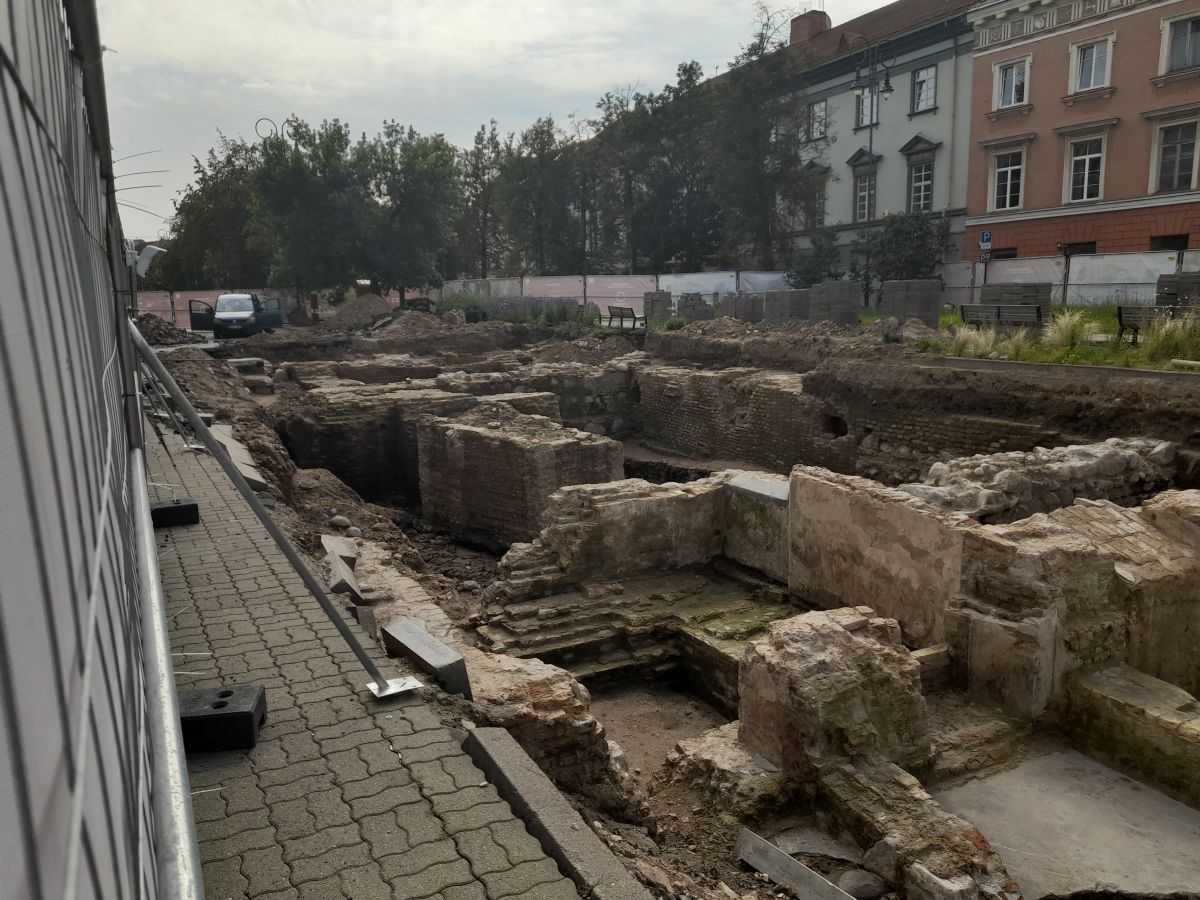
Archaeological site on Vokie?i? Street in Vilnius, where remnants of 14th-century structures and potentially older foundations have been uncovered during reconstruction work. Vokie?i? Street is one of the oldest streets in Vilnius.

I lifted that photo description from Google. I definitely do not have a Lithuanian keyboard. There is a museum in Vilnius, The indoor Museum of the Grand Dukes of Lithuania  encloses ruins like this of the 15th century palace of the rulers of the Grand Duchy of Lithuania before the time of the Polish Lithuanian Commonwealth. It’s pretty cool.

Here come the church photos. There are 28 churches just in Old Town.
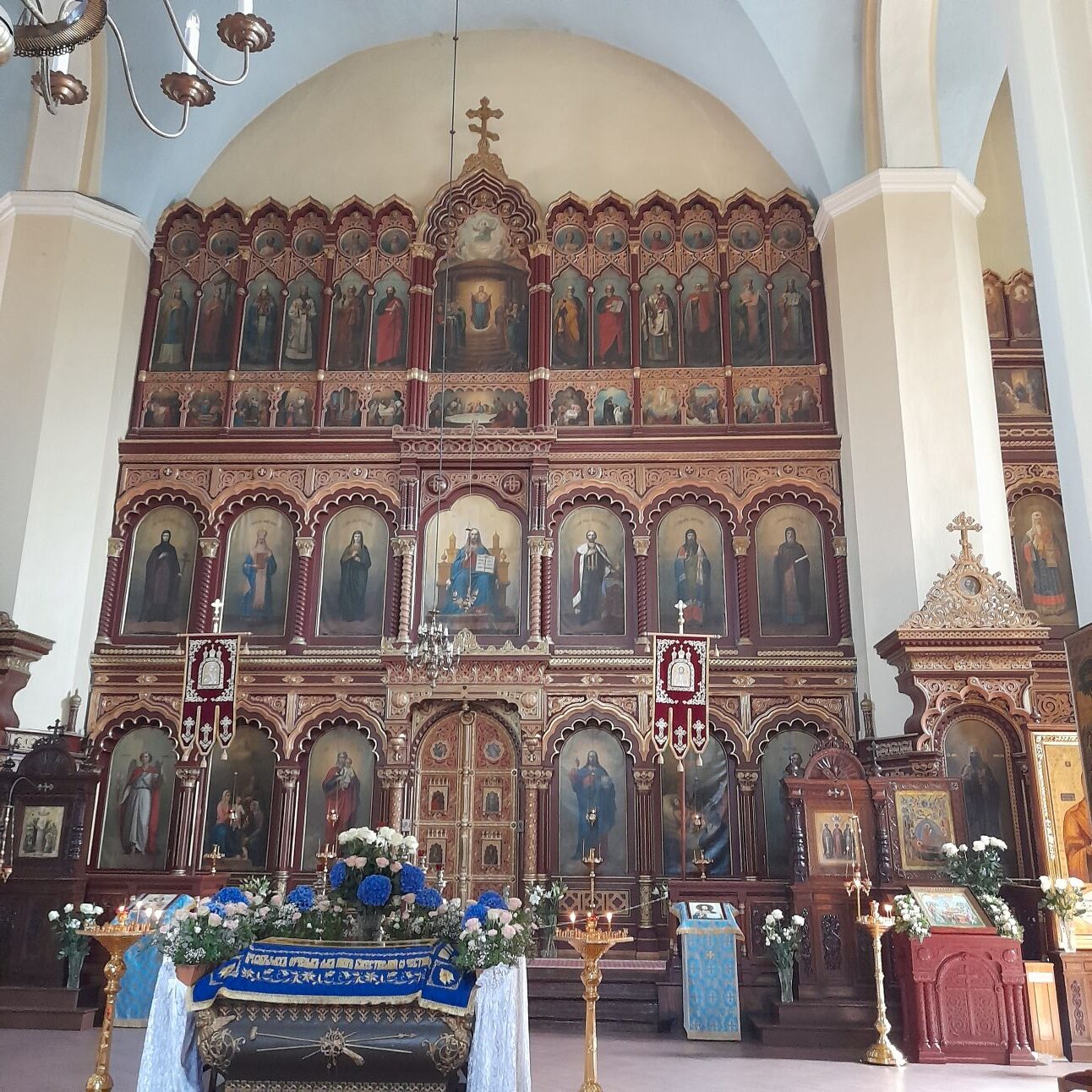
Russian Orthodox cathedral,  known as the Church of the Holy Mother of God, is one of the oldest and largest churches in Vilnius, with its origins dating back to the 14th century.

As you probably know, many ethnic Russians stayed in the former republics after the Soviets withdrew.
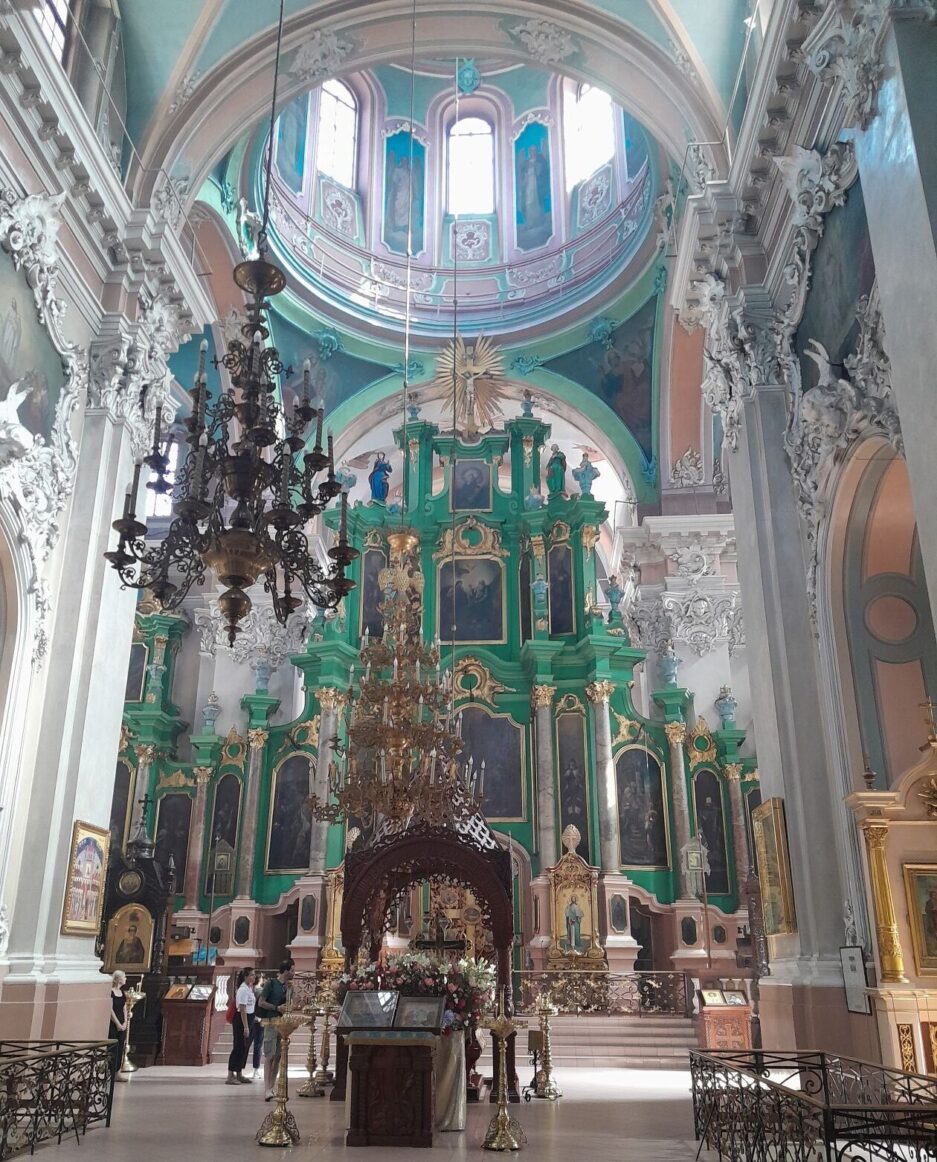
Orthodox Church of the Holy Spirit
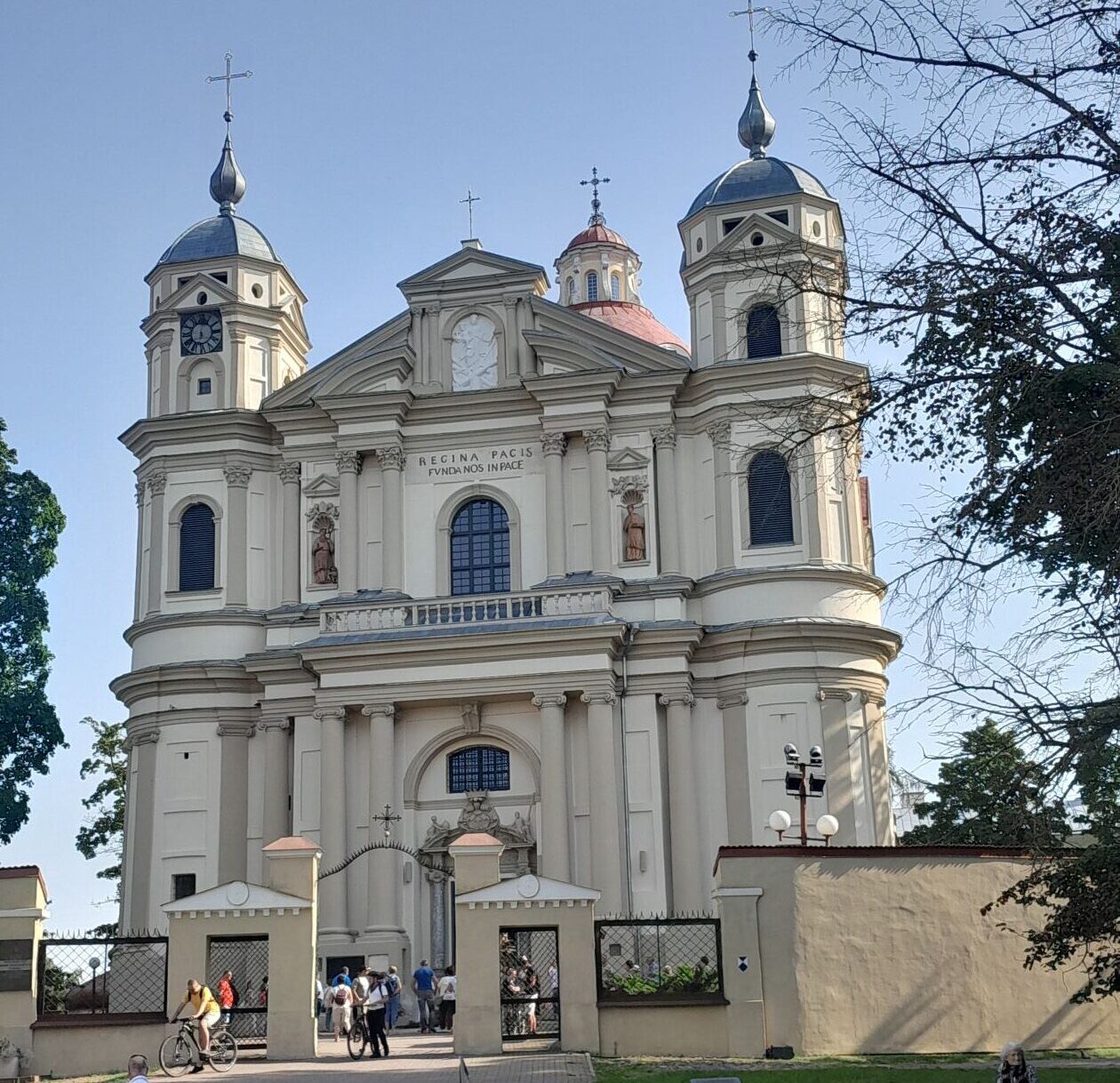
The Catholic Church of St. Peter and St. Paul
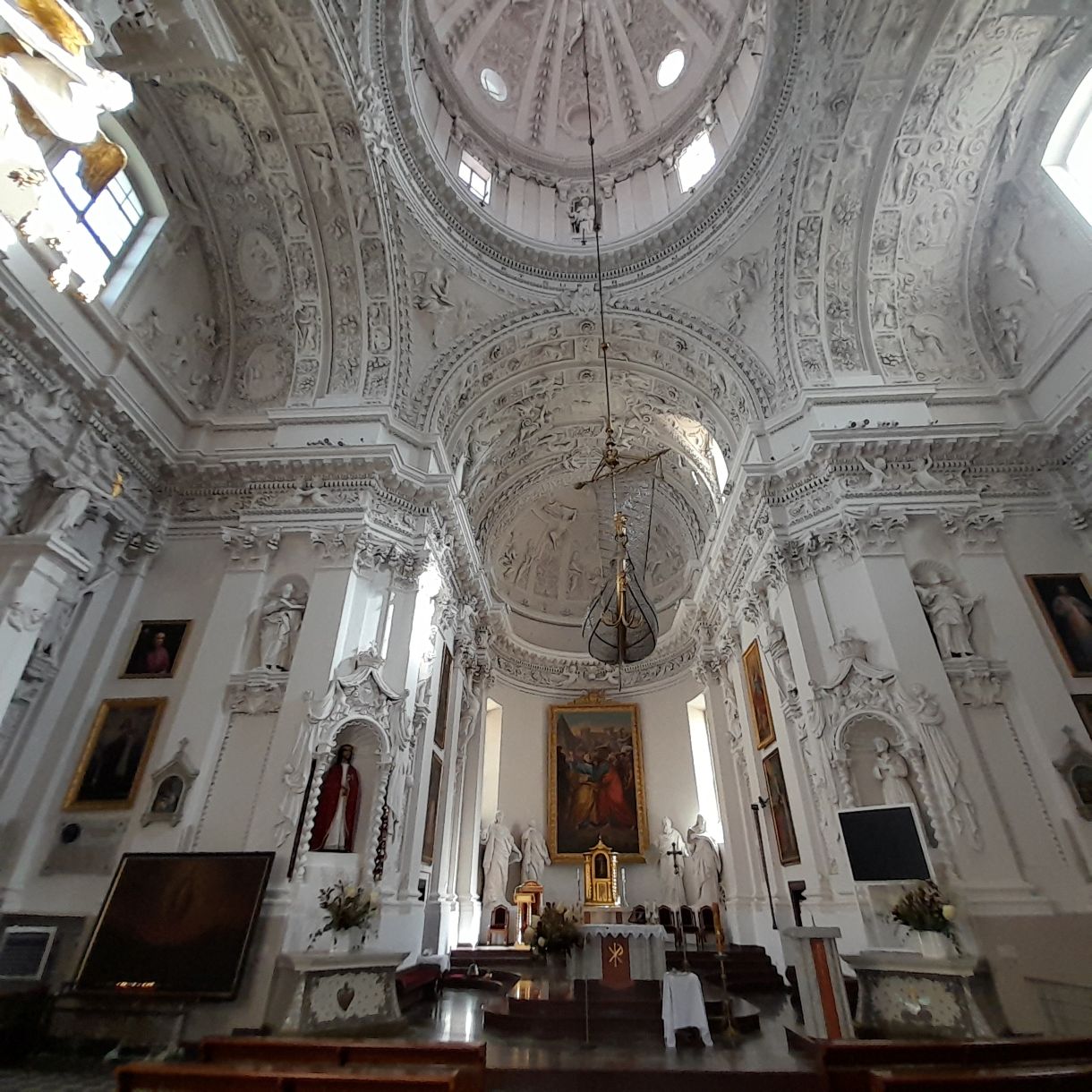
Interior of the Church of St. Peter and St. Paul
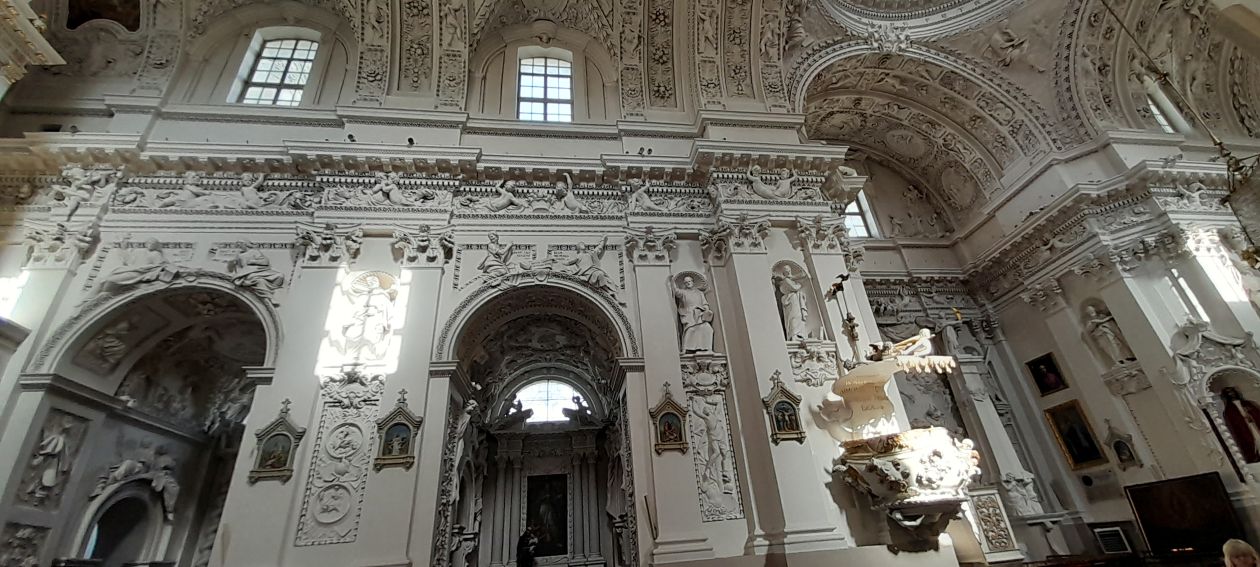
Closer look at the Baroque interior of the Church of St. Peter and St. Paul
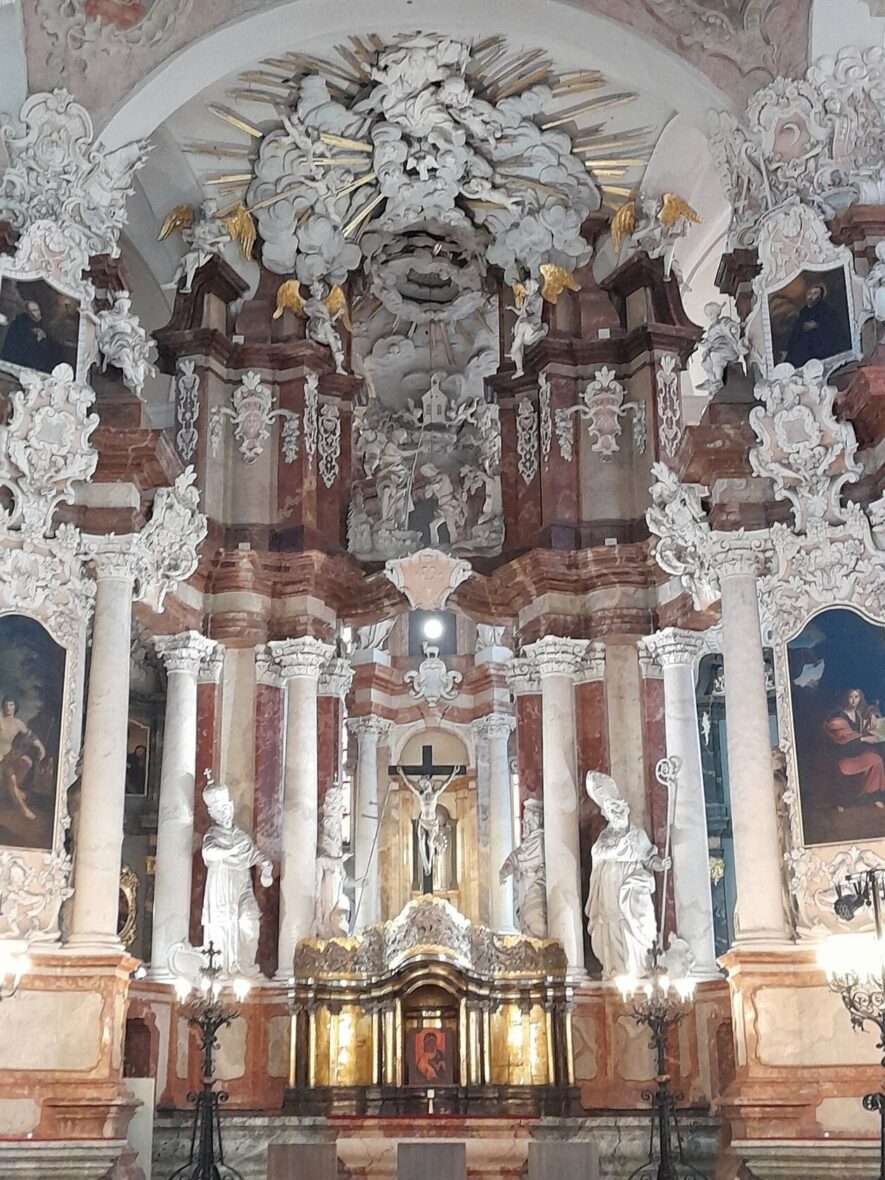
Interior of the Church of St. John the Apostle and St. John the Baptist
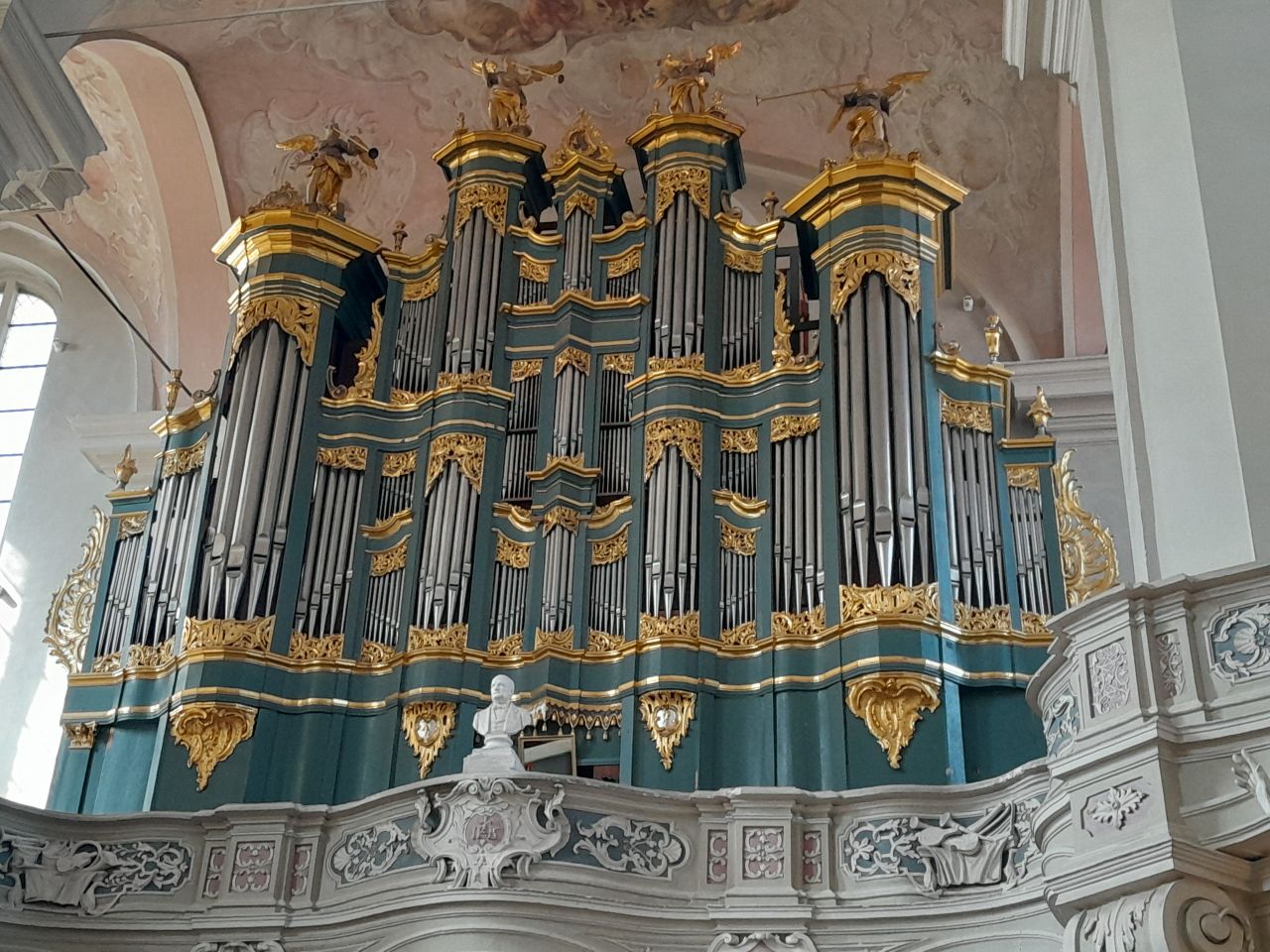
Beautiful pipe organ in the Church of Sr. John the Baptist and St. John the Apostle
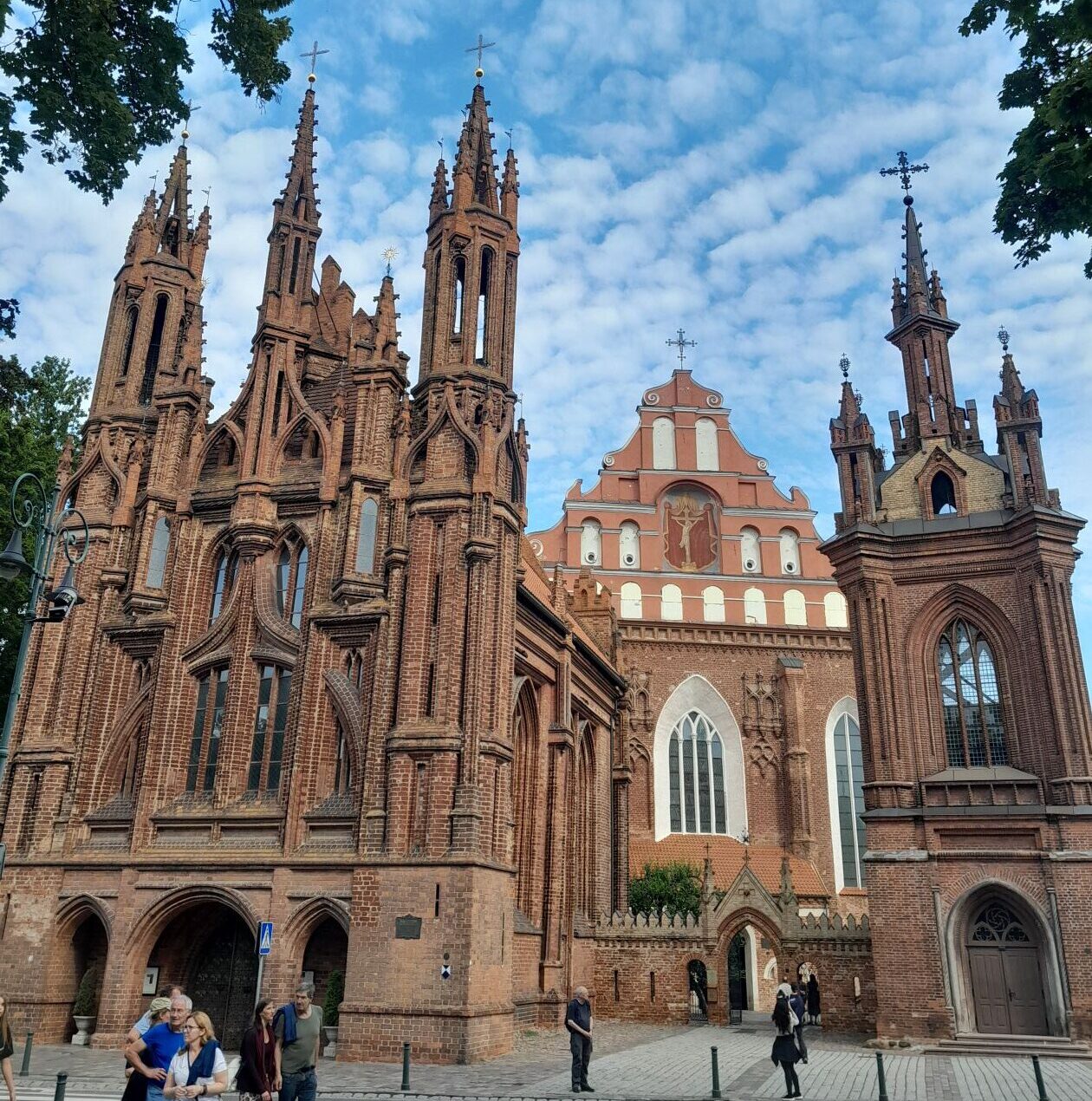
The Gothic St. Anne’s Church. The bell tower is on the right because they didn’t have the ability in the 16th century to put such a large tower atop the church.

There is a legend locals like to tell. They say Napoleon, on his way to Moscow, loved this church so much that he wanted to tear it down and rebuild it in Paris. In reality, Napoleon had no use for religion or churches, and used it as a stable. The communists used many of the churches as warehouses, auto shops and the like.
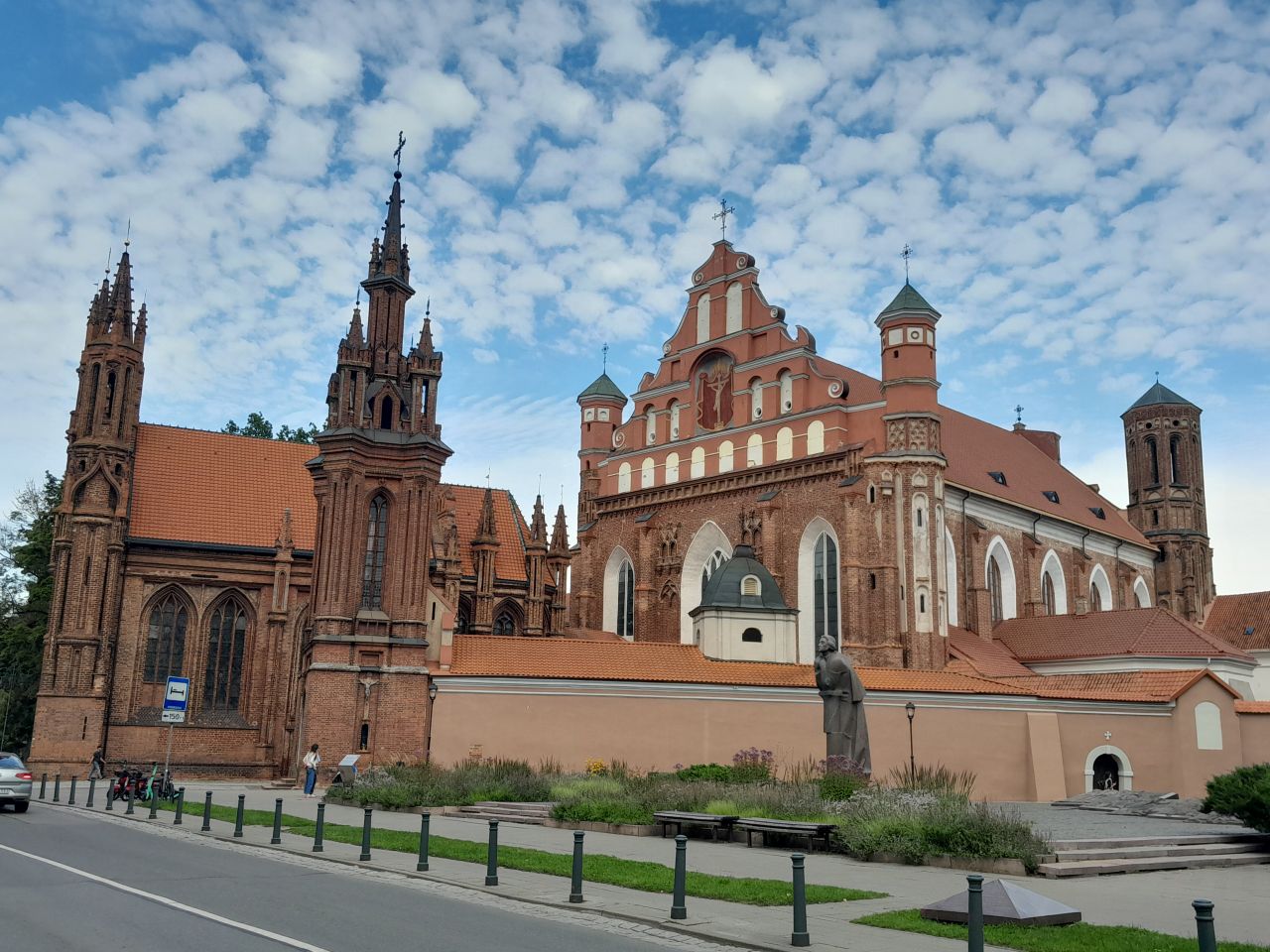
The Church of St. Anne and the Church of St. Bernard
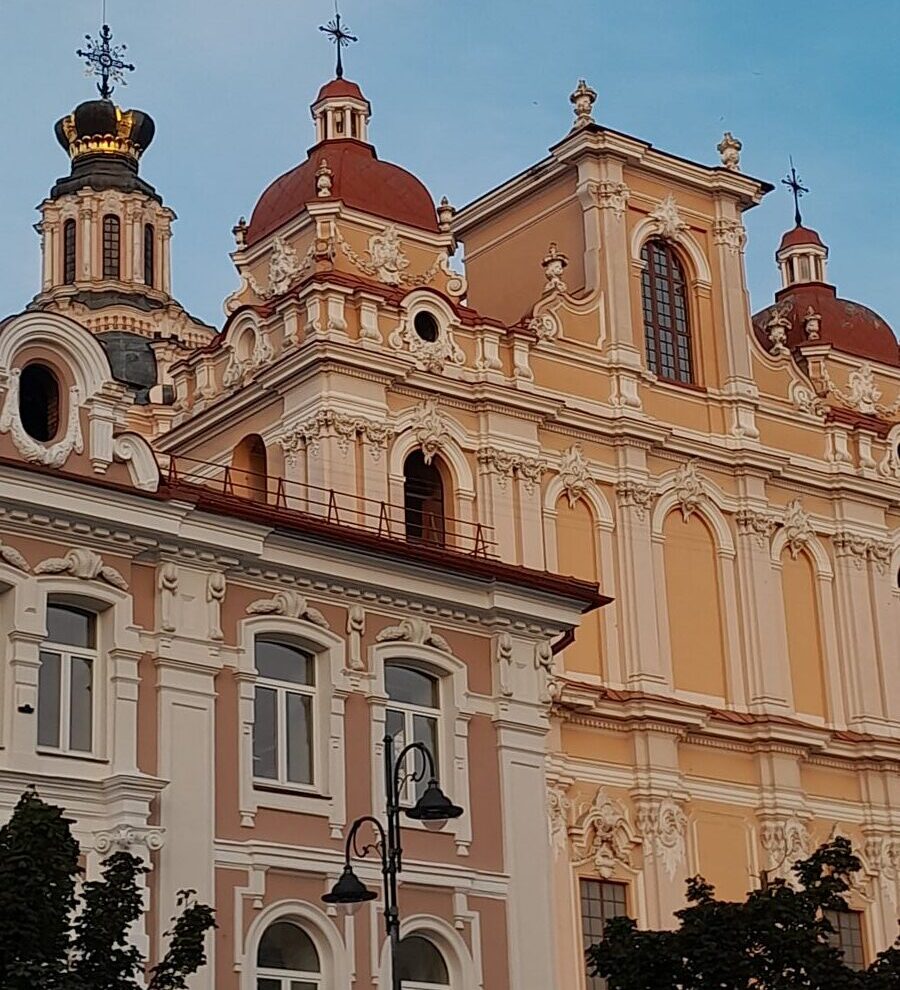
Baroque Church of St. Casimir, built in 1618

Okay, that’s it for the photos.

We’re home now. I don’t know where or when our next trip will be. We’re thinking of getting out of Korea next summer, too. I’m fed up with the heat here, and we’ve only been back three days! Or, we’ll just go when we get the itch. Could be any time. As we always say to each other, we’re not that busy.

Until then, be well, all of you.


Posted in Travel | Leave a comment

Latvia 2025

Hi again. Myung and I are in Vilnius, the capital of Lithuania. We walked all over Old Town today, and I’m bushed. Myung is tireless, and she’s checking out a ballet performance. So, I’m hanging out, writing this Latvia post.

If you’ve been following along or reading this in order, you know we were in Finland, then swung through Estonia for one night en route to Latvia. We spent eight days in Riga altogether, and two in Sigulda, about 40 km east of Riga. This leg of our trip was relaxed, mostly spent hanging around in Old Town Riga. Riga’s Old Town isn’t as big or impressive as Tallinn’s, and there isn’t that much to do, so we strolled, and took in a few museums and churches.

As you might guess, Latvia’s history overlaps Estonia’s and Lithuania’s, and to some extent Finland’s, a lot. I won’t get into it, but I surely increased my knowledge of the area’s history about 20-fold. For this post, I’ll just stick with some photos and whatever commentary pops into my head. If you’ve read my posts over the years, you know they are all in one take. I just proofread them, maybe change a little something, and publish them.

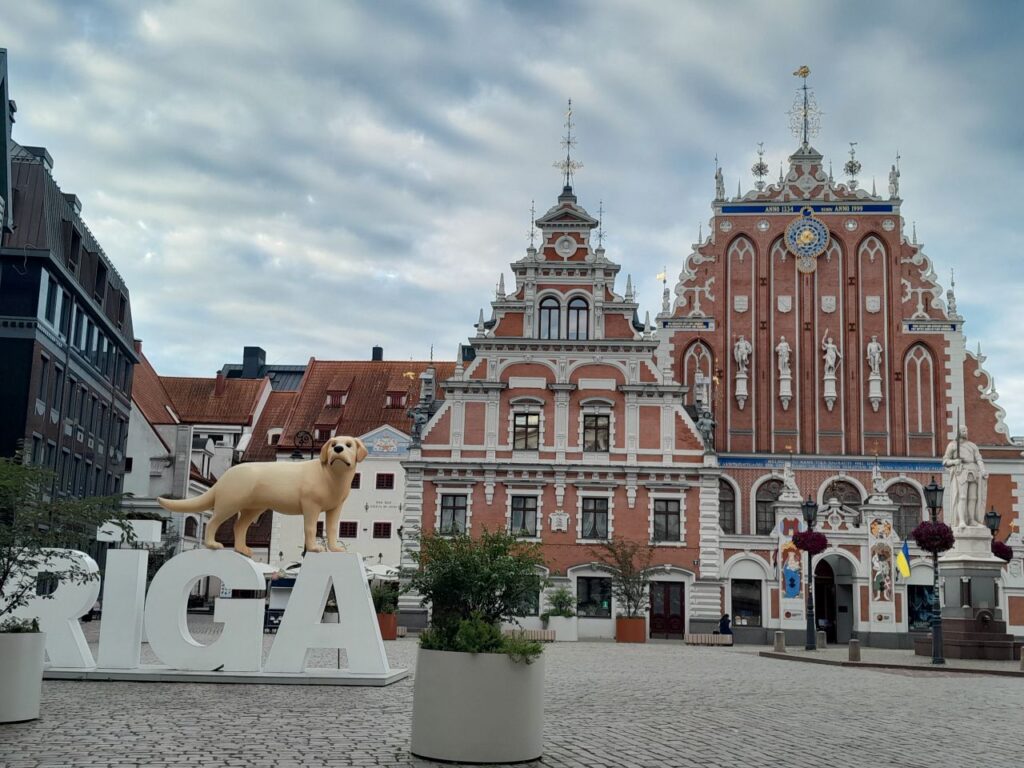
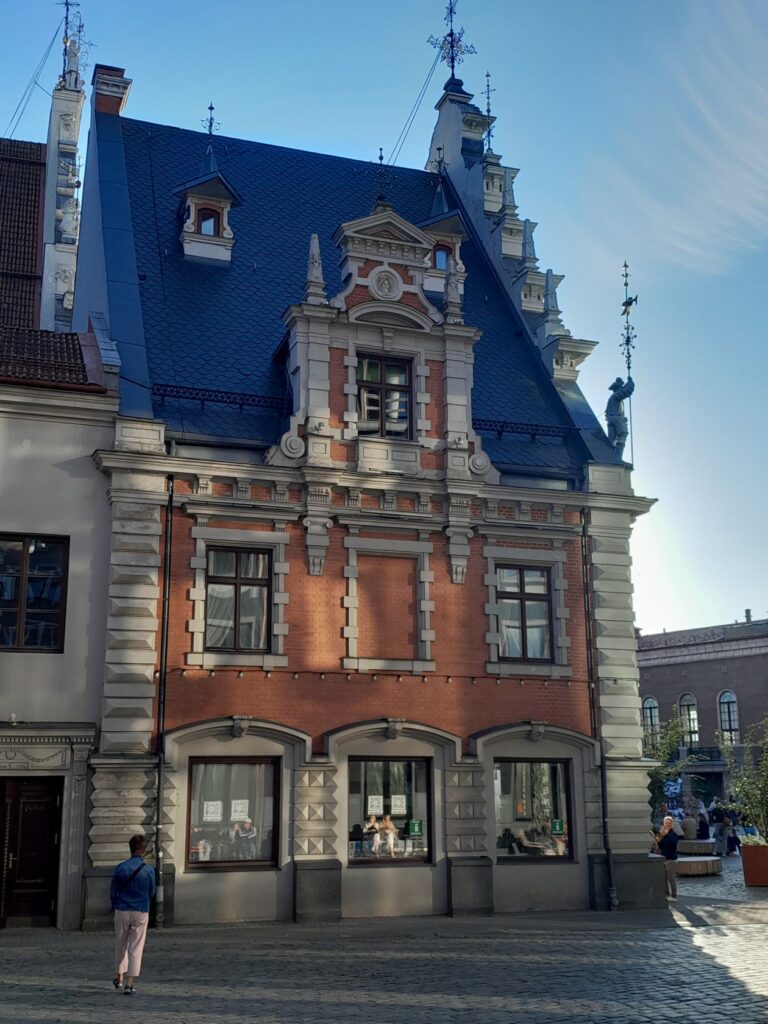
Originally built in 1334, these served as a meeting place and celebration venue for the Brotherhood of Blackheads, a guild of unmarried merchants, shipowners, and foreigners.

The blackheads were named that because there were a lot of foreigners in that crowd, and unlike the locals who are generally fair, there were a lot of dark-skinned, dark-haired people, mostly men.

It should be noted that almost all of these old buildings have all been restored, at least to some extent, due to decay, fires and war.

Side view of the House of the Blackheads

Riga’s interesting buildings aren’t limited to the medieval period, though there are plenty of those there.

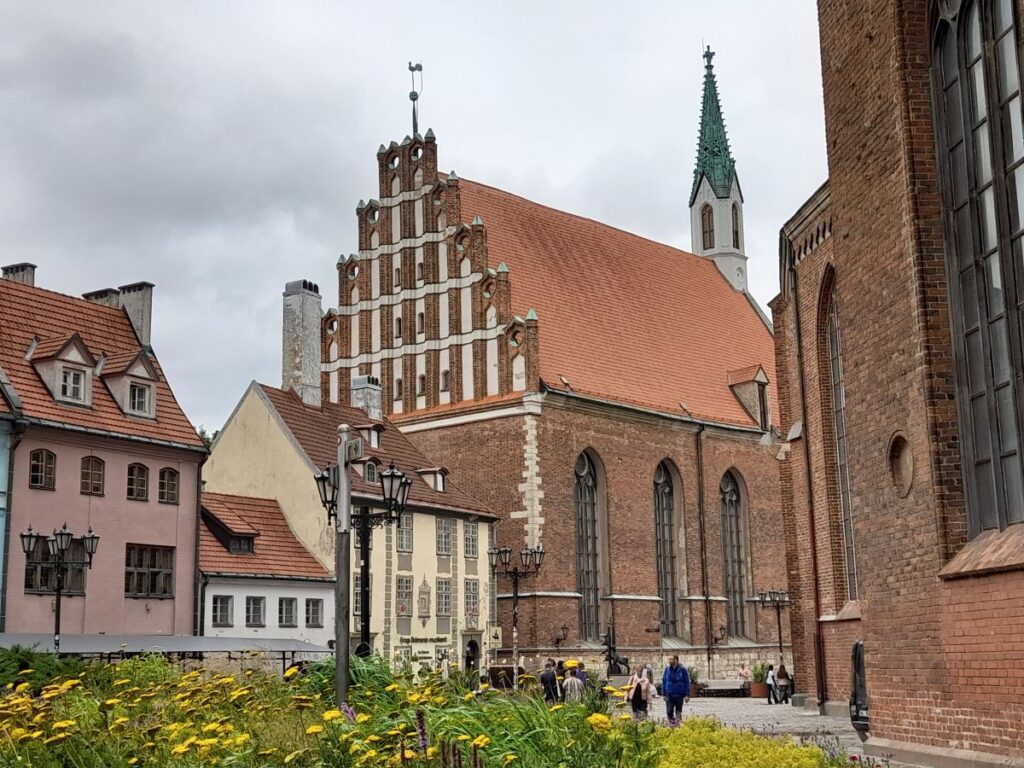
St. John’s Church

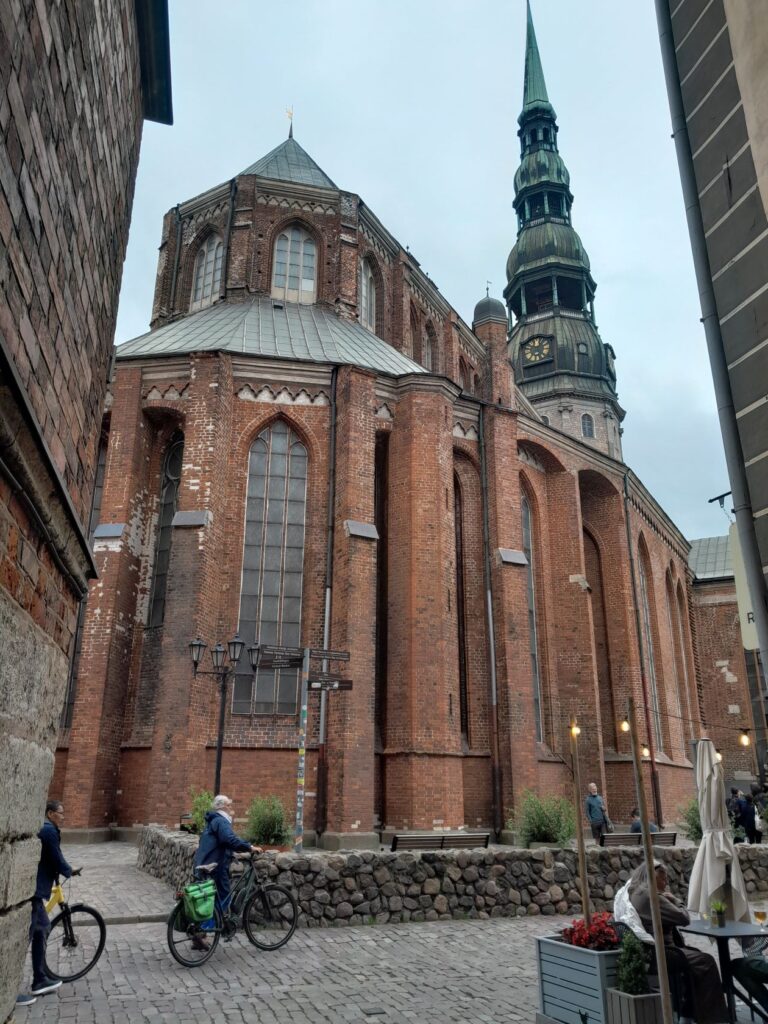
Church of St. Peter

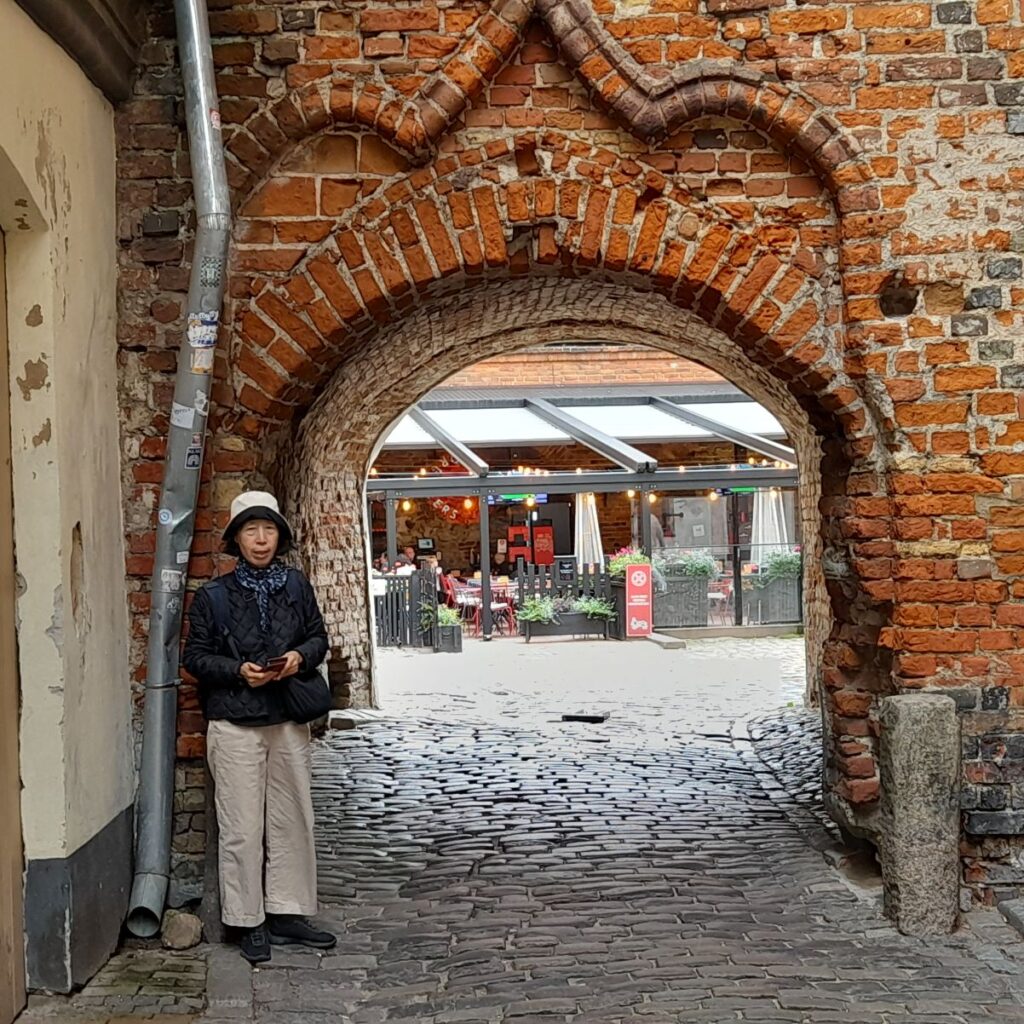
Myung standing in a medieval arch

Thee was an explosion of creativity at the end of the 19th/beginning of the 20th centuries, one of Latvia’s independent periods. Thee are a couple of neighborhoods where Art Nouveou was the look.

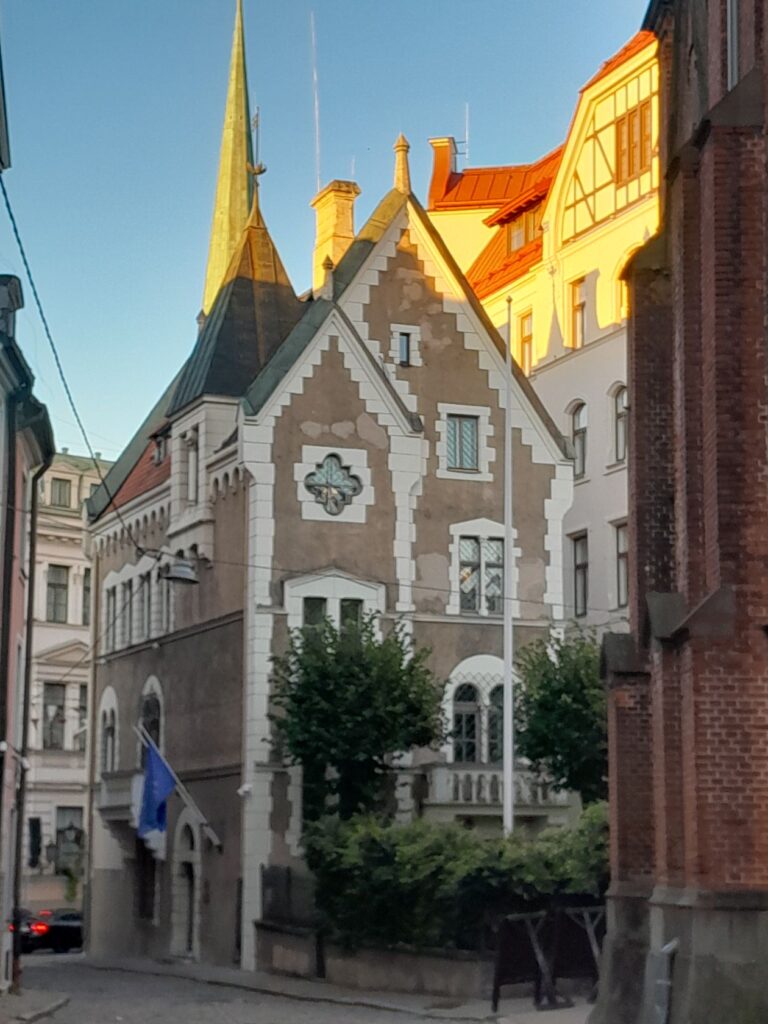
Reconstruction of a 14th or 15th century building, now home to the Danish embassy which is now the Danish embassy

Blend of architectural styles, including medieval, Renaissance, Baroque, and Art Nouveau

The Powder Tower is the only remaining part of the Upper Castle in Vilnius,

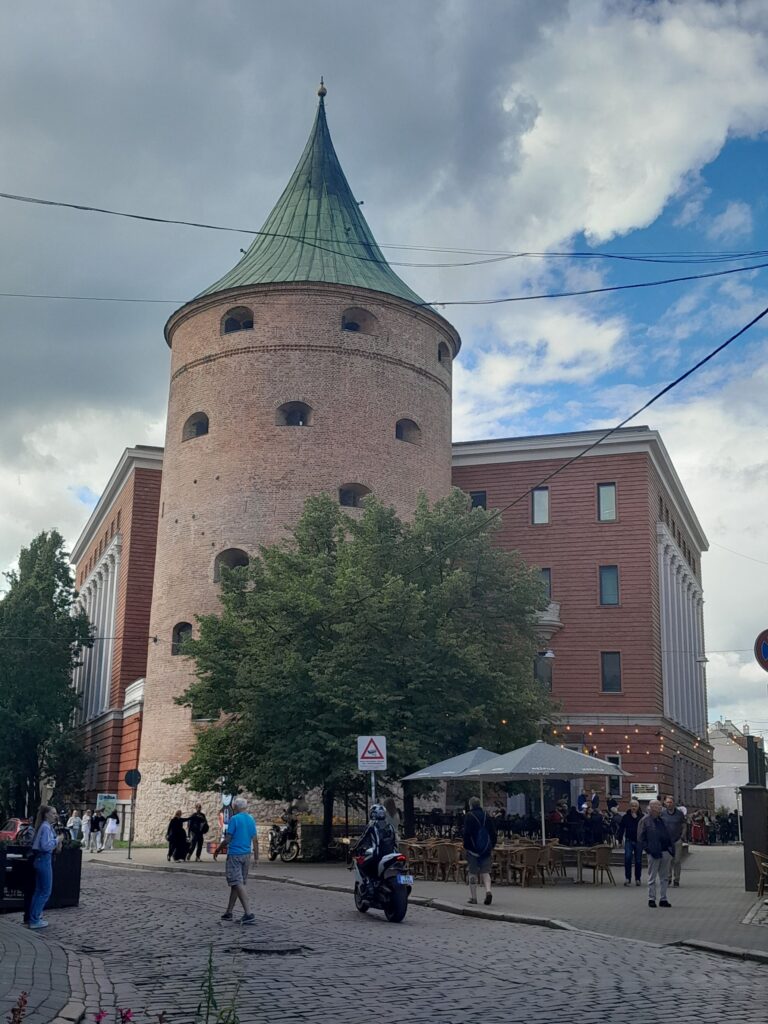
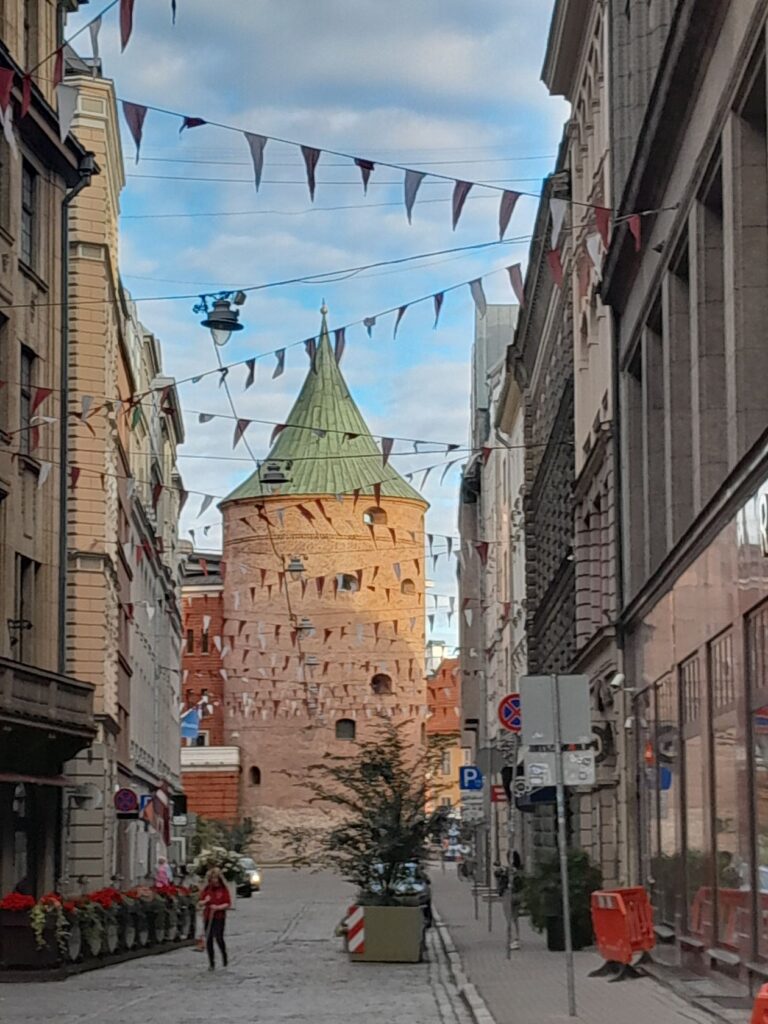
The Powder Tower, where gunpowder was once stored. It is the only remaining tower from Riga’s medieval defensive fortifications.

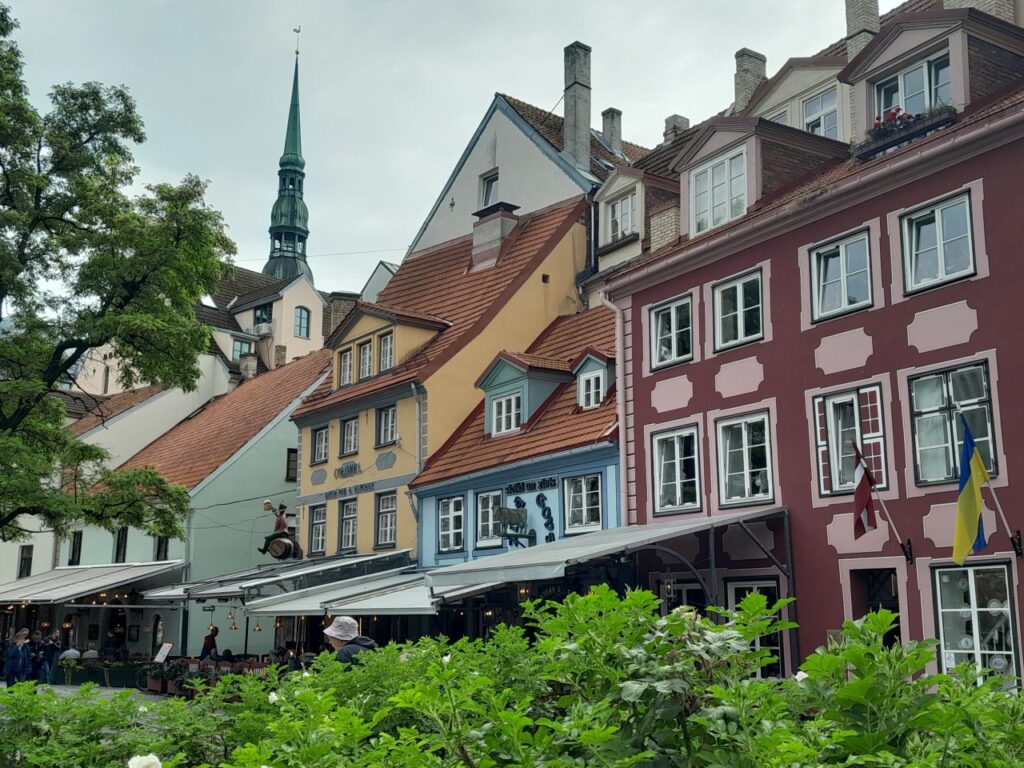
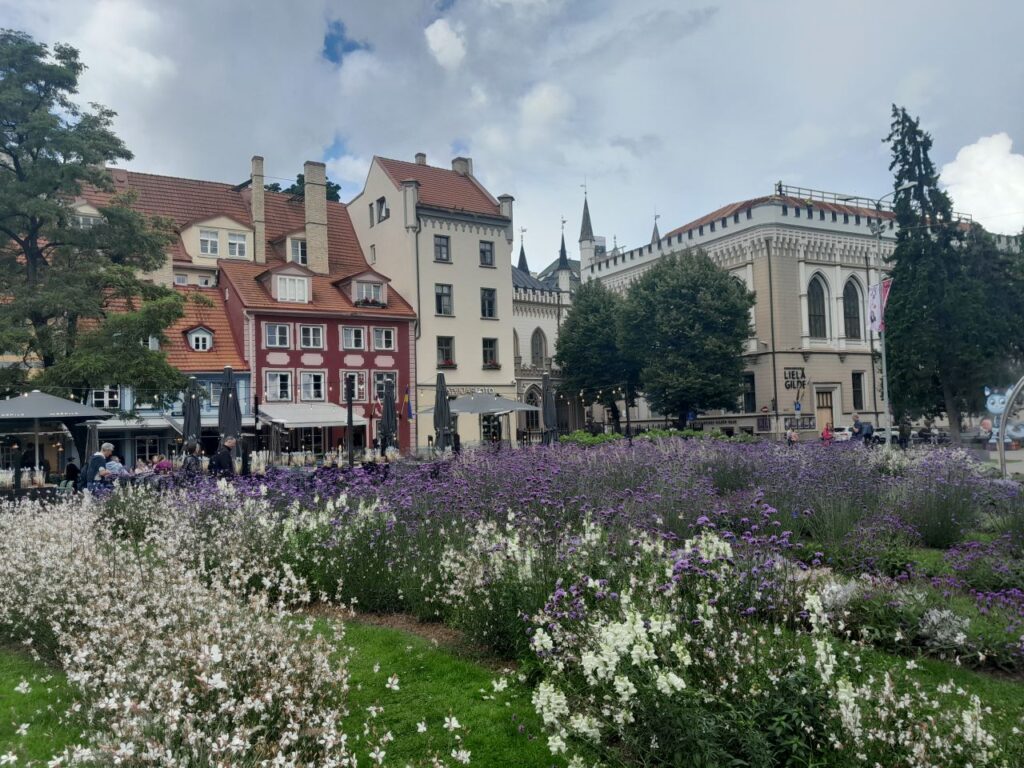
Garden and buildings in Livu Square

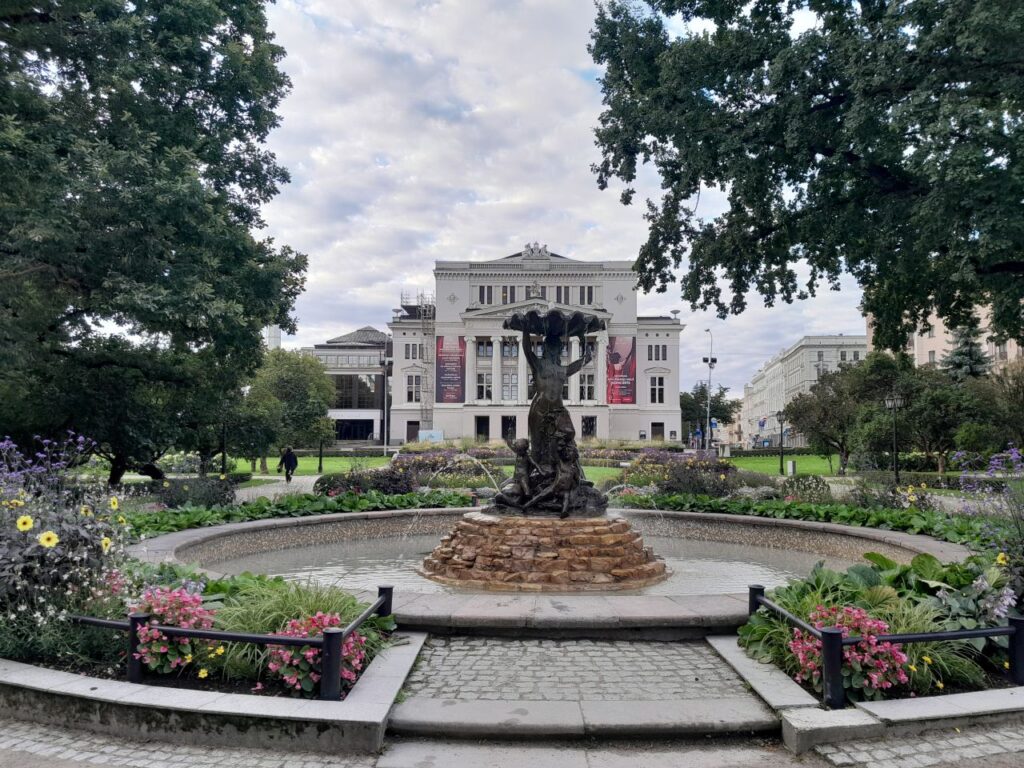
Latvian National Opera and Ballet building in Riga

Okay. Enough with the buildings. You get the point. Strolling and rubber-necking. Myung likes to window-shop, so she did a lot of that and I went with her some of the time. By the way, I once heard the French version of window-shopping is “window-licking”. Cute.

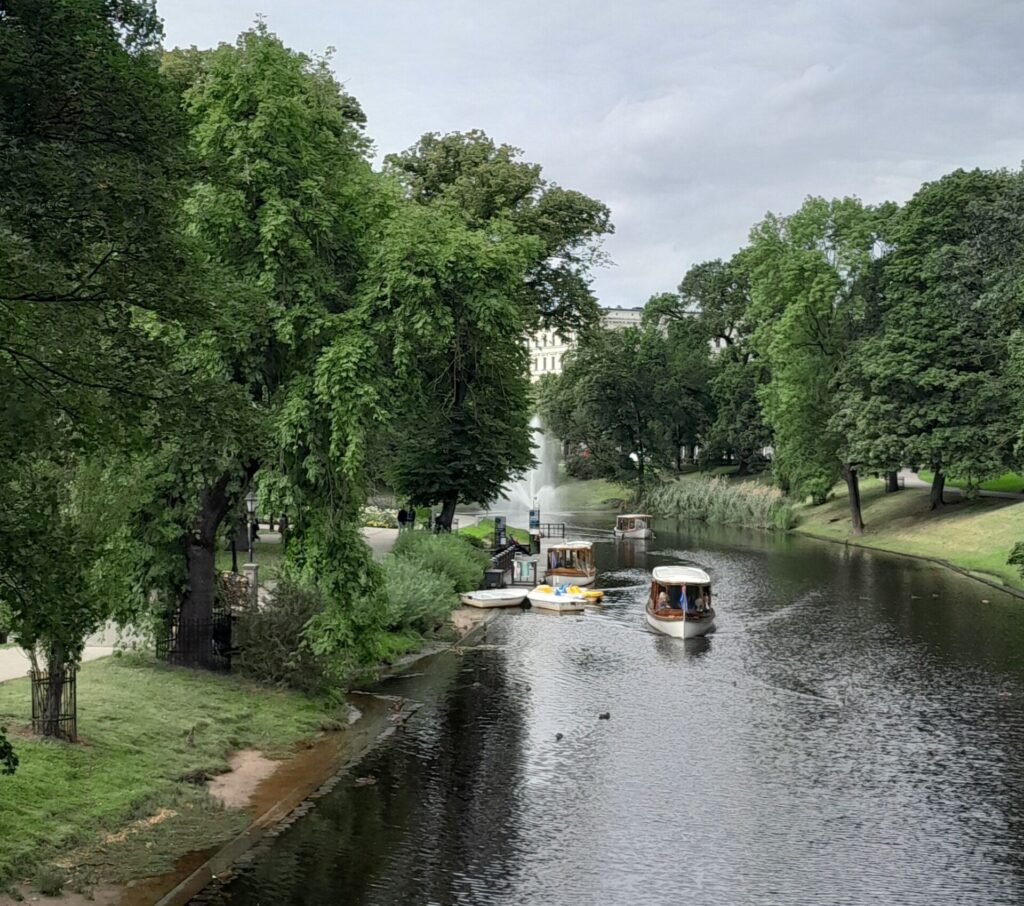
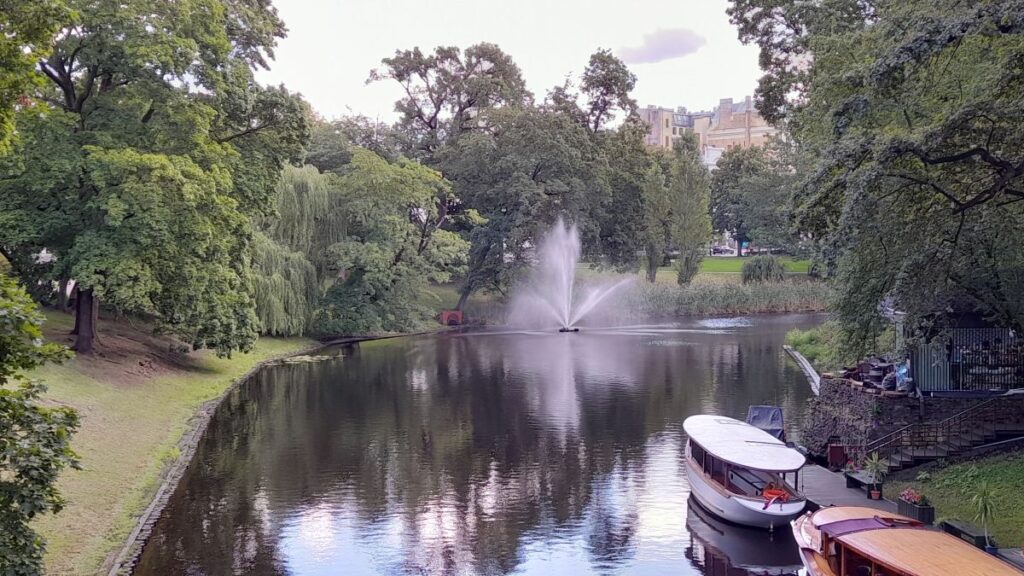
There’s a small river through town, with a park stretching most of the way along it. Also a nice stroll.

Slough in Riga called Pilsetas Canal

Sigulda is a popular town near Riga that locals and foreigners like. The attractions there are two medieval sites, Turaida Castle and Castle of the Livonian Order (more precisely, the Livonian Brothers of the Sword), both originally built in the 13th century, then expanded, then damaged or destroyed, then rebuilt and then restored in modern times. You will see that the restoration of the Castle of the Livonian Order isn’t all that restored. Mostly, on that one, all that was added was some wooden walkways so you get up into it.

You can google what the Livonian Order is. They were an offshoot of the Teutonic Order, blah, blah, blah.

Turaida Castle

Turaida Castle near Sigulda

Grounds around Turaida Castle

Caste of the Livonian Order

After Sigulda, we went back to Riga for two nights, even though we had done the basics. It’s a very nice place to hang out. And cheap, compared to Thallin, Helsinki or Turku. If we do get out of Korea next summer, Riga would be a cheap alternative to Helsinki. Helsinki would be better for sure. You get what you pay for, but you gotta have the money.

That’s it for now. I’ll post about Lithuania when we have left. Our flight back to Korea is in three days. Sometime soo after that, I’ll get it done. Be well, all of you.

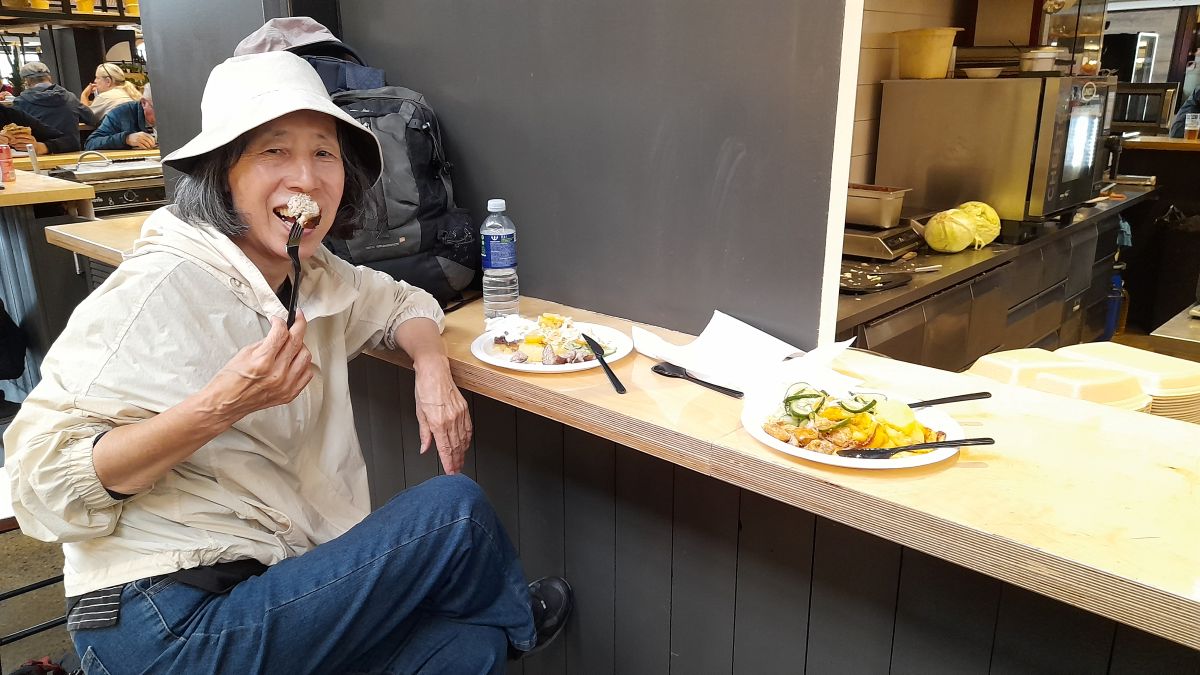
Our typical high-end dining experience. Meatballs, goulash, sauerkraut and pierogies at the counter

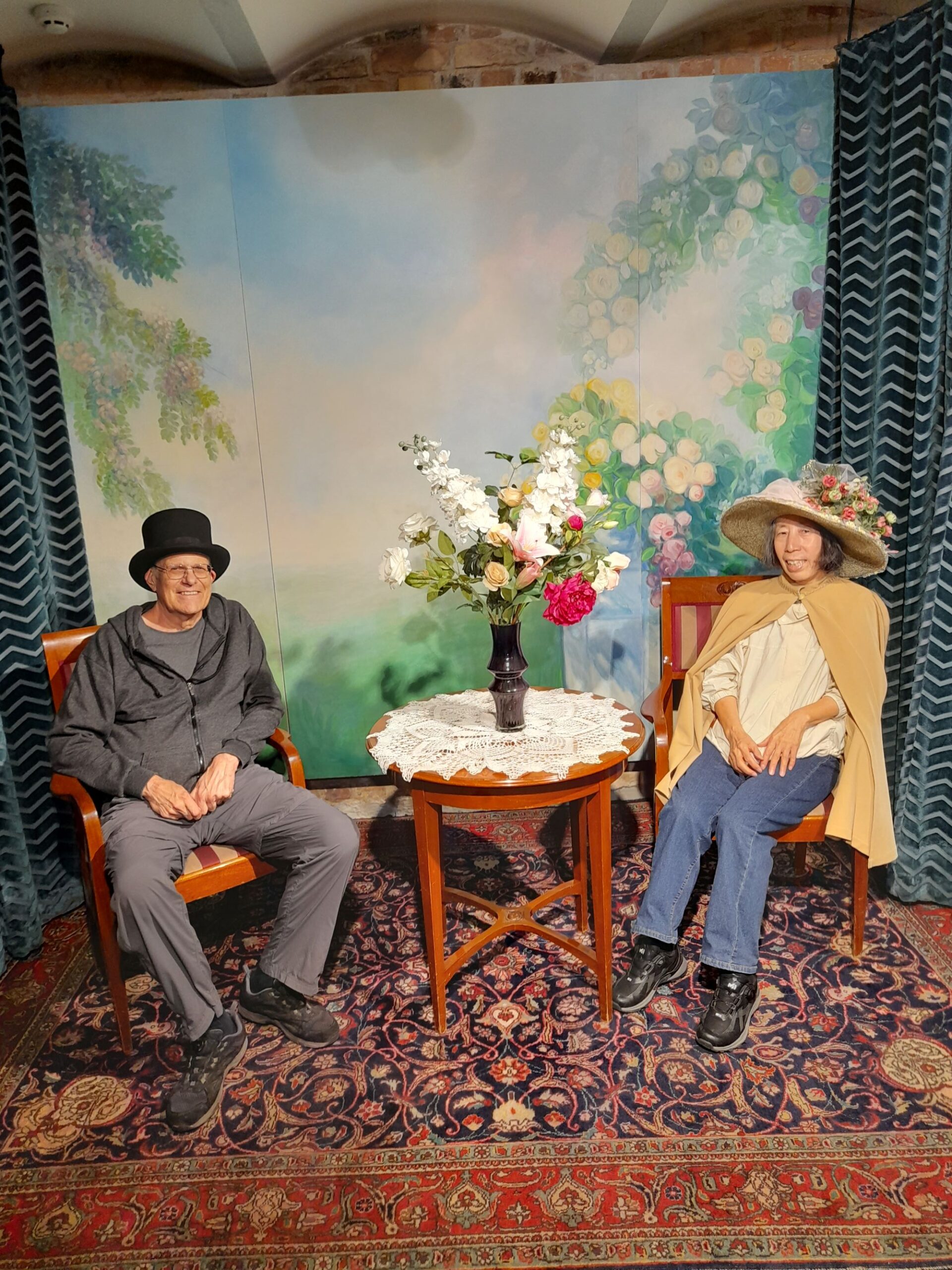
Us being cute in 19th century outfits

Posted in Travel | Leave a comment

Finland 2025

Hi y’all.

After several days in Estonia, mostly in Tallinn, we decided to take the 2-hour ferry to Helsinki. The plan was to stay there a while, then maybe continue west to Stockholm, or return to Tallinn then head down to Latvia. We chose the latter. We only have 5 weeks, after spending two weeks in and around Helsinki and Turku. We figured a little over two weeks in Latvia and Lithuania was about right.

I’m writing this on the ferry back to Tallinn. The best way to get to Riga, Latvia, was to just retrace our path, then take the bus from Tallinn to Riga. I booked 5 days at an Airbnb in Riga. We’ll decide where to go after that. Of course, that will be in the next post.

So, here we go.

We liked Helsinki very much, so much so that we are entertaining the idea of just spending the summer there next year, and bagging the hot Korean summer altogether. I’d have to be able to afford it, so we’ll see. Finland ain’t cheap, and I’m afraid of what the rents might be like. But I’m going to research it. Summer temperatures are mostly around 17-23 degrees Celsius (around 63-73 degrees Fahrenheit). That’s almost enough reason right there. The best part is Helsinki, and Finland in general, is just plain nice. The people we encountered were nice, content, and very chill. Most people speak at least a little English, and almost everyone under 40 speaks it very well. It’s light out from about 5 AM to 10 PM, which makes it conducive to being out. It’s clean and safe. There’s plenty to see and do. I’m tellin’ ya, it’s enticing. Our Airbnb apartment was even great.

I think I’ll start posting photos, and see if any interesting commentary emerges.

One of the first things that gets your attention in Helsinki is the mix of modern and old buildings. When you’re wandering around, dumb as a brick, it’s usually the buildings that draw your attention. Of course, there are churches.

Uspenski Eastern Orthodox Cathedral in Helsinki

Helsinki Cathedral in Finland, viewed from a narrow street leading up to Senate Square.

Clock Tower at Helsinki Central Railway Station

I will mostly spare you all the typical 19th century Northern European buildings. Besides the stately old building, are the modern ones. Finns have a flair for creativity.

Helsinki Central Library, shaped like a ship

Helsinki Central Library

Stairwell in Central Library

Helsinki Central Library

Kiasma Museum of Contemporary Art in Helsinki

Senate Square in Helsinki

Street view with Helsinki Cathedral in the background

We spent many hours just walking in Helsinki. Even better would be bicycling, I have never seen a more bicycle friendly place. Bike paths are everywhere and it’s nearly flat. There are so many parks that you could bike to most places without dealing much with city streets. And even in the central areas, the paths are well-marked and safe.

Besides that, we looked at museums and other points of interest, like all the visitors, then went to nearby Sipoonkorpi National Park and had a nice walk in the woods for several kilometers. Sipoonkorpi is about 15 km from Helsinki, and you can get there on a local bus. You feel like you’re “out there” because you are. For the most part, Finland is Helsinki (and the suburbs of Espoo and Ventaa), Tempere, Turku, and everything else, which is farms in the south and forest, swamp, and Lapland in the arctic north.

Fisktrask Lake (translates as Fish Swamp Lake) in Sipoonkorpi National Park

Wild blueberries in Sipoonkorpi National Park

Weather is unpredictable here. We got totally soaked in a rainstorm that blew through while we were walking . It really didn’t look like rain, so we didn’t bring umbrellas. Then we had to ride the bus all wet for 25 km back. People didn’t seem to notice. I think they are accustomed to being stuck out in the elements. Like, I’m sure they get stuck in the elements in the winter. Yeesh! Even now, with the temperatures what most people would consider a little chilly, they are out in shorts and short sleeves, soaking up what passes for warmth here.

____________________________________________

It’s been several days since I wrote the above. We are now in Riga, the capital of Latvia.

Next, we were off to Turku, Finland’s old capital before Czar Alexander I moved the capital to Helsinki in 1812. Finland was never independent before 1917, so I use the term “capital” even though Turku was really just a regional capital in the Swedish Empire from the 12th century till 1809, when Sweden lost it to Russia. Helsinki was just a fishing village when Alexander decided to move the capital closer to St. Petersburg. So, Turku has all the historical sites prior to the 19th century.

Turku is another nice place to hang out. It’s big enough (207,000) to be more than a town, a tourist destination for Finns and foreigners so it’s worldly, has plenty to see, and is also chill. We spent several days there. Old Town has sites dating back to the 13th century, like this “castle”. A fire destroyed almost all the wood structures in 1827, and damaged most of  the stone and brick structures. This castle was restored after the fire.

Turku Castle. First built in the 1280’s. Massively restored after a fire in the 17th century.

Turku Castle

Visitors mostly do stuff along or near the Aura River that runs through the town and into the Baltic Sea. That location is why Turku existed in the first place. We had lunch on a bench on this spot a couple of times.

Aura River in Turku

We would get our grub at the Old Market Hall a couple of blocks away. It was built in 1896, and is the oldest indoor market in Finland. Now it’s upscale.

Old Market Hall in Turku. Now offering boutique food items and lunches

Inside the Old Market Hall in Turku

There is no shortage of hangouts along the river.

Along the Aura riverfront in Turku

Along the river in Turku

I’m frequently asked, “Where do you stay when you’re traveling?” Well, we usually rent an apartment on Airbnb. I’ve noticed Booking.com often has whole apartments, too, at usually a little higher price. That said, here in the Baltics, Booking.com is often a little cheaper. In either case, whole apartments are often, if not usually, cheaper than hotel rooms. And you get a kitchen and lots of room, and it’s usually quieter. I don’t get how hotels stay in business, except in cities where the hotel interests have the pull to ban Airbnb’s.

Airbnb in Turku. The bedroom is behind the photographer’s (Myung) left shoulder.

We thought seriously about taking the ferry to Stockholm, but decided we’d have plenty to do in Latvia and Lithuania. So, we backtracked through Helsinki and Tallinn, spending the night in Tallinn, to Riga. That gets us up to the present. We’re in the middle of spending a week in Riga. In a couple of days, we’re going to another place, Sigulda. Then we’ll come back to this same Airbnb for a couple of nights before heading to Lithuania. We’ll have about a week there before heading home.

So, that’s the story, morning glory. Be well, all of you.

At the Sibelius Monument in Helsinki


Posted in Travel | Leave a comment

Estonia 2025

Myung and I often talk of getting out of Korea during the hot summers and the cold winters. About two and a half weeks ago, we got fed up with the record heat in Korea, and decided to go the Estonia, Latvia and Lithuania. A week or so later, we arrived in Estonia. No plans, Just figure it out when we get there. That’s usually how it works, anyway. About the only plan was to line up an airbnb in Tallinn, the capital.

Tallinn is good place to fall out the back of a turnip truck. It’s a capital, so it’s tourist friendly, modern, not overwhelmingly big (population 458,000), has a compact city center/Old Town, and English is spoken by over half the people.

We did as almost all visitors do. That is, stay near (or in, if you have money) Old Town. If you look at any website listing what to do in Estonia, about three-quarters of the recommended sites and things to do in all of Estonia are in Old Tallinn. The whole place is a World Heritage site. There are some outdoorsy places, especially along the coast, like Lahemaa National Park, an hour and a half east of Tallinn. We went there, but spent the rest of our 5 days in Estonia in Tallinn. Our airbnb was about 10 minute walk from Old Town.

Tallinn Old Town

Tallinn Old Town

You may ask, isn’t five days in a country kind of short for you guys? Yes it is, but as I said, there isn’t much else to see in that little country. We could just get more into it, for sure, but we decided to move on.

Helsinki, Finland, is just a two-hour ferry ride away. Many Finns go to Tallinn as a day trip so, compared to that, we stayed a long time. Plenty long enough to take many pictures. Old Tallinn’s buildings date from the 14th century to the 19th century. During much of that time, Germany and Germans under Russia, ruled and their culture is evident. You can see it in the architecture.  Our experience reminded us of walking in the old Italian cities we visited last year.

Old Town Square

Old Town Square

Alexander Nevsky Russian Orthodox Cathedral

“Short Leg Street”, connecting upper and lower Old Town

St. Catherine’s Passage

St. Catherine’s Passage

Another site is one of Peter the Great’s palaces, Kadriorg. Besides this shack he and his court had to stay in, there are about 250 acres of park.

Japanese garden in the Kadriorg Palace grounds

I mentioned Lahemaa National Park. We took a guided tour out there. 23% of Estonia is bog, and this is said to be the most attractive. Interestingly, it was the very first national park in the Soviet Union, established in 1971. It’s a big peat bog. The Soviet leadership wanted to dig it up for fertilizer, but the Estonians successfully talked them out of it. The tour guide took the eight of us to some scenic spots, then sent us over about a kilometer long wooden walkway over the bog. It looks better in person than in the photos. Lots of wild cranberries.

o

I know first impressions are often misleading, but Tallinn seems like a very livable place, at least during the warmer part of the year. Good size, kinda slow, plenty to do, happy-looking people like in Finland, full of urban parks, and cute. I could imagine spending a summer or two here, in the nice 20 degree Celsius weather (68 degrees Farenheit).

Tram car in Tallinn

Park. a couple of blocks from our airbnb

If we had done any planning, we would have approached this trip differently. We thought we could chill out in Estonia, Latvia and Lithuania for five weeks, and have flights back from Vilnius. Lithuania. Turns out, we decided to do more than just chill. We took the ferry over to Helsinki, and that’s where we are now. It further turns out, we tentatively decided not to explore Finland. We’re going to the old capital, Turku, in a few days, and from there take a ferry to Stockholm. It sort of looks like we’ll end up flying back to Riga, Latvia, then go down to Lithuania. Maybe there’s a ferry, though that would be a long ride.

So, that’s where it’s at now. When we leave Finland, I’ll blog again. Until then, be well, all of you.
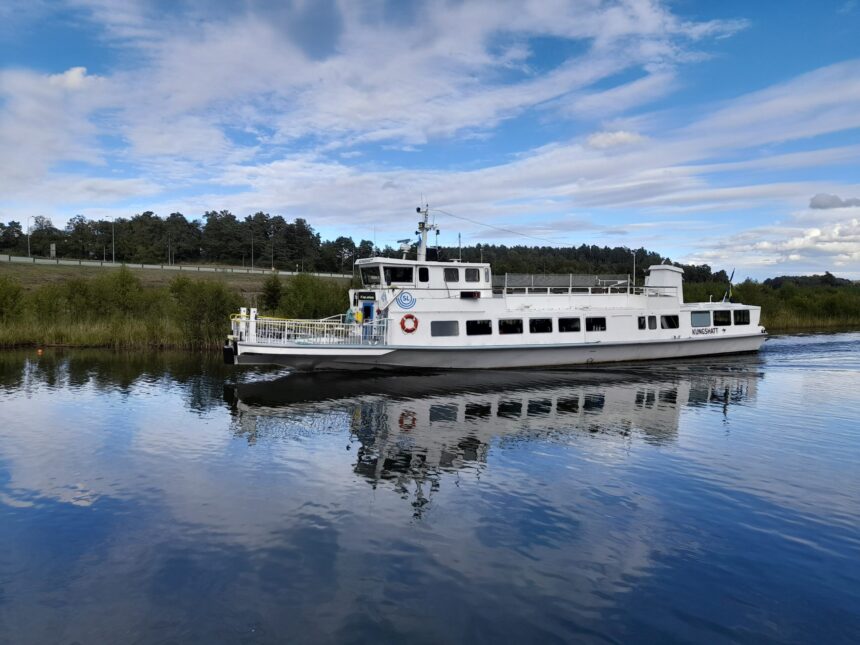
Last shot back toward Tallinn from the ferry to Helsinki

Posted in Travel | Leave a comment

Italy 2024

Romulus and Remus, suckled by a she-wolf, went on to found Rome


Myung and I talked about going to Italy for a long time. She had never been to Europe at all. So finally, we went, for five weeks. Italy is obviously a country where one could spend a lot more time, but we figured that five weeks would be long enough for us at this point in our traveling lives. Endless backpacking is over for us. The only question was, do we make it open-ended and come back when we felt like it, or just buy round trip tickets and plan to return on a specific date? We chose the latter, also figuring we could change the return date for a charge. It turned out that five weeks was a good amount of time. We were ready to come back home right about then.

Our itinerary was to begin in Rome, where we landed, then go to Venice, Florence, more of Tuscany, Salerno/ Pompeii, and finally Sicily. We mostly went to places tourists usually go, but also had the time to wander a certain amount by not being compulsive about seeing “everything”. I uploaded not too many photos. Most people have seen many pictures of Italy, and I don’t need to show too much of what everybody has already seen many times.

In Rome, we went to three or four of the most popular museums. There is something about seeing famous art in person. You get better appreciation, of course. I most wanted to see Bernini’s sculptures, which I didn’t have a memory of from 44 years ago. In fact, I didn’t really remember seeing them at all.

I suggest you go to Full Screen to view the photos. Most of them are tall and you won’t be able to see the whole photo without scrolling down through it.

Bernini’s Rape of Persephone

Everybody appreciates how Pluto’s fingers grip Persephone’s soft thigh.

How many pictures do we have of ruins? Too many. You’ve seen hundreds of those pictures, and I don’t have any which offer any new perspectives. So here’s the one I’ll post. You’ve seen it, too.

The Forum

Altogether, we spent six days in Rome. That was enough. We saw museums, ruins, the Vatican, lots of art, Appian Way, other notable places, and wandered. We had our semi-timeline, and the crowds and city business were becoming oppressive (though it’s much worse during the tourist season), so it was time to go. That said, it’s not too hard to lose the crowd. There are nice places to chill out and get a view.

View up the Arno River

From there, we took the train to Venice. To me, Venice is practically a theme park. Myung wanted to see it, though, which is reasonable if you’ve never seen it. We wandered around there for three days, seeing the usual stuff, taking the usual pictures, enjoying the narrow alleys and bridges, watching glassblowing on Murano, and riding around on the vaporetto water buses. Here are a few photos. I’ll spare you St. Mark’s.

Grand Canal in Venice

Ponte di Rialto, Venice

Bridge of Sighs, Venice

Looking out our Airbnb apartment window in Venice

From there, it was off to Florence. Again, we did things one would expect with a few days in Florence. It was here where we started to focus on the food.

Sandwich joint in the Mercato Centrale,
Florence

The Uffizi Gallery was the highlight. We have photos from in there, lots of them, but you can look at them online. I’ll just post these of Florence.

Ponte Vecchio, Florence

Florence from the dome
of the cathedral

Then we spent a couple of days in Siena. I liked Siena. No crowds. It seemed very liveable to me. It’s got its medieval and Renaissance sites, but it’s functional.

Street in Siena, Tuscany

After that, we did one of the things I was looking forward to, driving around Tuscany. Though driving in the little lanes of medieval towns was not fun, but it was fun to cruise around leisurely, looking at the countryside and having the freedom to explore without relying on public transportation, as good as that is in Italy. (Aside, few people pay on the buses in Italy. People just get on and get off where they like. The drivers don’t care.) Tuscany is full of quaint towns and villages, perfect for strolling through picturesque lanes in these old places. We went around Val d’Orcia, Pienza, San Gimignano, Montepulciano, Pitigliano, Sovana and a couple of places I can’t remember right now. For the most part, these places are well-known destinations, but at this time of the year, it is pretty quiet. In fact, the economies are dependent on tourists, so many hotels, restaurants and shops are closed. Fortunately, Airbnb’s are almost always available, and that’s where we stay almost all the time.

Old gated path, somewhere in Tuscany

Sovana, Tuscany

Above is Pitigliano.

Typical restaurant with a view in Tuscany

From there, we went all the way down to Salerno. We wanted to go to Sicily, and Salerno is on the way. We thought about going to Naples, but decided not to tackle another big city just then. Salerno is nice, another liveable city with sites for the tourist.

Medieval aqueducts
Salerno

And it’s close to Pompeii. Both of us have interest in ancient history, so Pompeii was a must. We were going to see the Greek temple near Paestum, but skipped it because we were going to Sicily, where there is a lot of that.

Pompeii is a lot of this.

Floor mosaics in Pompeii

Victims in Pompeii

We also took the ferry to one of the most popular towns on the Amalfi Coast, Positano. Nice ride. Sort of crowded again. though.

Positano, Amalfi Coast

Positano, Amalfi Coast

From there, we went to Sicily. They just roll the train cars onto the ferry, and you continue on from Messina.

Train cars onboard ferry from Italian mainland to Sicily.

We rented a car again. Driving westward on the southern coast, the first stop was Taormina. Taormina is probably the most popular tourist destination in Sicily, outside of Palermo. It is most famous for the Greek amphitheater.

Greek Amphitheater
Taormina, Sicily

Greek amphitheater
Taormina, Sicily

But it’s plenty nice all over town. A couple of days there is just about right.

Modern construction on ancient wall in Taormina, Sicily

Stairway in Taormina,
Sicily

Then we went to Ortigia, old town Syracuse.

Ortigia

Then it was on to the picturesque towns of Noto and Ragussa, with their cute, narrow lanes.

Stairway in Noto

Ragusa

Duomo in Ragusa

Ragusa

Then we went to Agrigento, where the Talley of Temples is. There are a couple of kilometers of Greek ruins there.

Greek temple in the Valley of Temples

Greek temple in the Valley of Temples

Finally, our time in Italy was winding down. We spent the last few days in Palermo. Palermo is definitely a big, busy city, but had a rich history. One can easily walk around there for several days.

Piazza Pretoria, dominated by the Fountain of Shame, so called because the statues were considered scandalous in the18th century. Some even thought the waters caused syphilis.

Palermo Cathedral

Ballaro Market in Palermo

I could go on and on with photos of monumental buildings, fountains and the like. but this post getting too long. So I’m going to wrap this up. Oh, wait. There are the scrumptious intestine burgers. They really are good.

Intestine “burger” in Palermp

I’ve skipped over a lot, like churches and food. I did want to add these two items because I like the photo and the video of the Palatine Chapel in Palermo.

Inside the Church of the Gesu (Jesuits) in Palermo

Okay. So this is it. I’m done. In conclusion, we had a great time.

Be well, all of you.

Posted in Travel | Leave a comment

Taiwan

Hi y’all. I hope you had a happy holiday season. Myung and I didn’t celebrate Christmas, as it’s not a big deal here in Korea. We did, however, get out of town again. This time, we went to Taiwan from Dec 27 to Jan 6. We were going to stay till the 12th, but came back early. I’ll write about that at the end.

We had been wanting to go to Taiwan for years, but never got around to it. Finally, we just went. Winter is the best season to go, as it’s hot nine months out of the year. Plus, we got tired of the cold here. As I think I have mentioned, we watch the nightly travelogue on one of the educational TV channels here. Taiwan has been on the show a few times, and that helped create the itch. The food looked great, so we went with the intention of eating. Boy, did we do that! There aren’t many restaurants in Taiwan. The culture is to eat in one of the thousands of hole-in-the-wall joints, sitting on a plastic stool or taking the food with you. Myung often takes photos of the food, but she didn’t this time. I think those pics are boring for most people, anyway. I’ll just say, it was good to be eating Chinese food again. I think it’s the best in the world, certainly for the price. These little “restaurants” are only slightly more expensive than at the night markets. For those of you who don’t know night markets, they are areas, usually a blocked-off street or a parking lot where sometimes many food vendors set up stands and serve food to carry till you get to the next stand. They are most popular in tropical countries where it’s hot and muggy during the day, and going outside in the relatively cool evening is an enjoyable relief.

So, I’ll go chronologically with what we did. The main international airport near the capital, Taipei, is actually in Taoyuan. I booked us an airbnb place to stay there, and spent three days and four nights. I learned a long time ago that it’s good to plan nothing upon arrival and to allow a day to get settled. What to do almost always presents itself. Often, you, or at least I, need a day to recover from jet lag, though this time the flight is only 2 1/2 hours and one time zone away. We walked around, eating, and looking at what Taiwan looks like. Then we went to a couple of museums. There is a nice park near where we stayed.

One of the attractions “everybody” sees is the Mazu temples. I’ll get to that in a minute. Besides the museums and that park, there are a couple of other places not worth really mentioning here. So I’ll skip to Tainan.

We rented a car from this little two-car rent-a-car business and went to Tainan by way of Alishan National Park. We would have done some hiking or something there, but it was the long New Year holiday and the crowds around there were awful. You couldn’t even park near anything good, so we bagged it and went on to Tainan.

Tainan was the capital till the 1880’s. Lots of traditional Taiwan culture there, compared to Taoyuan. Taoyuan/Taipei is like Orange County/Los Angeles, as in why would you go?. We got there on New Years Eve. On New Years Day, we figured nothing would be open, which is pretty much the case, but we did happen by a Mazu Temple where they were preparing a big parade, Very big, like an Indian puja. I know little about Mazu. I just say Mazuism is a traditional religion centered on Mazu, the Goddess of the Sea. There are elements of Buddhism and Taoism, but that is basically all I knew. I read about it on Wikipedia. If you are interested, here is the link: https://en.wikipedia.org/wiki/Mazu

There are hundreds of these temples in Taiwan.

Mazu temple

Mazu temple


The insides of the temples all look pretty much like this. I don’t know about all the demigods. I did read that they can be loosely compared with Buddhist bodisatvas.

We were walking around, looking for something to do, when we happened across alleys filled with people preparing for a parade. All were dressed as Mazu figures. Then they filed out. It turns out that this parade is a thing. Many people lined the streets to see it, including Western tourists who were clearly more informed than me.

I think it was the next day, we went to a famous old house overgrown by banyan trees. Reminded me of Angkor Wat, though not nearly that impressive.

Another nice park was near there. Having a car was nice. Just go here, just go there.

The main thing to do in Tainan is going to the national historical museum. It really made Taiwan history interesting. It didn’t pull punches on what it was like when the nationalists first came over in 1949. The grounds outside and the building are beautiful.

After Tainan, we went to the most famous scenic attraction in Taiwan, Taroko National Park, where the Taroko Gorge is. Nice place. If you’re totally jaded about natural wonders, I suppose you wouldn’t think it was great. But I’m jaded, and I still liked it and the road over the mountains of Taiwan’s interior.

“Cloud sea” below a high point on the road to Taroko. It really looks like you are looking down on a body of water.

Taroko Gorge

Tribute to the hundred and something workers who died building the road through Taroko Gorge.

The west side of the island is flat, and that is where nearly all the 23 million people live. Only towns are along the east coast. The mountains go straight up from there.

Beach in Hualien

Hualien was the last place we stayed in Taiwan. The plan was to go up the east cost, then spend 5 days in Taipei. Unfortunately, a big truck smashed into our parked rent-a-car. We were in it, but were not hurt. That was that for the car. We just came home.

All in all, it was a good vacation except, of course, for that last afternoon. Taiwan is surprisingly mellow for a crowded little country, except for New Years Eve in Alishan. I wish we could have gone to Taipei. I really wanted to see the treasures brought over by the retreating nationalists. Maybe next time.


With that, until next time, be well, all of you.


Posted in Travel | Leave a comment

Around Trabzon, Turkey

Wow! That sign makes it seem like Trabzon is a must-see destination, like Dollywood. Well, Trabzon is a destination, but almost only because it’s in Turkey, where I hadn’t been since 1974. So, it’s worth it for that reason.

When I’m on a long trip, like a month or more, every few weeks, I need downtime. If Trabzon had captured my imagination, I could have gotten up the energy to be busier, like seeing every little thing, taking buses here and there, bothering to learn more about the culture, and stuff like that. After all, a month isn’t long compared with my previous life on the road. But I didn’t feel like it. And I don’t have to. So there! Myung had more energy, but she’s lived on the road before, too. Filling the day is not a goal in itself for her, either.

I anticipated enjoying Turkish food. Since you have to eat, Turkey is one of the best places to do that. Even the cheap grub is good. It’s all inexpensive, actually, even less expensive than Georgia.

Pizza in Trabzon They transliterate it “pide”. The photo doesn’t do justice to how tasty this is.

Bread is nearly free, and sooo good. Wheat flour or bakers must be subsidized. Meals almost always come with all the bread you can eat, even if you’re having a $2 bowl of soup.

This isn’t just cheap white bread. Even the white bread is hearty.

My impression of Turkey? I’m still pretty jaded about observing new cultures. My impression was that Trabzon, at least, was quite modern, compared to 50 years ago. Which is no surprise at all, duh. The world is modernizing in much the same way everywhere. The eating and shopping experience is getting uniform. Conveniences are commonplace. Travel is easy. Internet really changed everything, making travel easy. You hardly need any skills or courage. Turkey could be thought of as an exotic destination, but about 90% of people could go there in their sleep, especially if they just drift around.

Market in Trbzon

Tea is definitely a thing there. Myung bought some to take home.

Side by side by side tea shops. Or, have a Coke.

Certainly, there is much to learn about Turkey, but in my week there, I just took it easy. Myung had more intent, but I wonder how much she will retain.

Trazdon is a Black Sea coastal city about 200 km, a 3-hour bus ride, from Batumi, Georgia. Actually, it’s two bus rides because you have to go 13 km from Batumi to the border, then continue on. The border crossing is a breeze. The coast around there, and in Georgia, is pretty. Not Big Sur, but better than Florida. Right behind the coastal strip are mountains. In places, these mountains are quite high, snow covered and scenic. It looks a bit like viewing the Andes from just inland from the Chilean coast, if you’ve ever been there.

Here’s sort of a view from a pleasant boardwalk at a mirador call Boztepe.

Boztepe

You can see how it goes up right away, as soon as you get away from the coastal strip.

There’s a nice botanical garden, though not as nice as in Batumi.

Botanical garden Trabzon

Botanical garden Trabzon

Botanical garden Trabzon

We mostly just walked the streets for the week we were there. There is a crumbly castle wall, one of Kemal Ataturk’s homes, some okay museums and such. We got out of town three times. One day we went to Sumela monastery. Another day we went to a resorty scenic lake, called Uzingol. And another day we took a two-hour ride to Giresun, in the next province. (There are 81 small provinces in Turkey.)

Sumela monastery is a World Heritage Site worth going to. It was originally constructed in the 4th century. Then it was enlarged during Justinian’s reign. Then it was destroyed by the Byzantines in the 7th century. Most of what you see now, including the frescoes, is from the 11th century.

Sumela monastery

Sumela monastery

Medieval frescoes ain Sumela monastery

Here’s Uingol. Not so fantastic, but hey, it’s there.

Uzingol

Here’s Giresun. The view of the city from the heights is like Trabzon. We mostly went there to enjoy the ride along the coast.

Giresun

We stayed in Turkey till it was time to go home. We went back to Batumi, spent the night, took the train to Tbilisi, spent another night, then hung around in town till our plane left at 10:15 PM. Yuk! What a grueling trip home that was, first taking that red-eye to Doha, then the 9 hour flight to Seoul, then back to Gyeongju from there. I wish I could sleep on planes.

I gotta show you our airbnb in Tbilisi. Believe it or not, it was nice inside.

If you’ve never been to the Doha, Qatar airport, here’s what the terminal looks like. It’s like an arboretum, complete with cool mist.

Doha, Qatar airport


So, that’s it for this trip. I suppose we’ll go someplace else again, someday. My need to travel is sated for now.

Again, I welcome any comments. I’d like to know who, if anyone, reads this.

In any case, be well, all of you.

Myung’s Josif Stalin refrigerator magnet


Posted in Travel | Leave a comment

Batumi, Georgia

From Mestia, we went to Batumi. Batumi is on the Black Sea coast. It’s Georgia’s main port and, for sure, it’s like port cities everywhere, with many trucks, containers, and other loading and hauling facilities in that part of town. Travelers don’t need to explore that. They will go downtown, to the old town, the parks and the rocky beach.

We went out the night we arrived. The shoreline is a popular stroll for visitors and locals alike. Since it was after dark, we didn’t take many pictures. Nothing is lit up that you could photograph during the day. There is one attraction meant to be viewed at night, the Ali and Nino statues. In short, “Ali and Nino” is a tragic romance novel about a Muslim Azerbaijani man and a Christian Georgian woman during the tumultuous Russian revolution/World War One years. The brightly lit, mechanical statues oof the ill-fated couple come together and separate, like in the novel.

Well, these pictures don’t do it justice, but it is pretty cool, the way these maybe 40 foot tall statues, made of strips of metal move through each other. I cannot figure out how they did this.


After sitting in the big park for an outdoor opera recital with live orchestra, the weather started to deteriorate, so we went to our airbnb apartment and rode out a pretty wild thunder and lightning storm. The weather was bad for a couple of days, after which we went out to the shoreline.


I don’t know what that geodesic dome is. The rocks here are actually pretty nice.

Just off the beach is a nice park, very large for a city of only 155,000.

That general area is Old Town with, you guessed it, old buildings.

Note the Bolt car. Bolt is a European equivalent to Uber. It’s cheap and easy. We used it a lot.

Much of old town is uninspiring. In fact, there are a lot of casinos and faux upscale restaurants (as well as real upscale restaurants). I think Batumi city is a one-day town.

By far, the best thing we did there was go to the wonderful botanical garden, a few kilometers out of town. It’s big, and a nice afternoon walk,

After doing the stuff I described, it was time to go. Since we were back in Korea, Myung had been talking about crossing the border, 13 km south of Batumi, to visit around Trabzon, Turkey. So that’s where we went next and where we are now. We’ll stay around here until it’s time to return to Tbilisi and fly home. We’ll be going back through Batumi and killing an afternoon and night there before taking the train, but I doubt we’ll do anything worth posting.

I’ll blog about Trabzon and around there in the next post. Meanwhile, until then…


Posted in Travel | Leave a comment

Mestia and Ushguli, Georgia

They say the Caucasus Mountains is the Switzerland of Eastern Europe. I’ve also heard “poor man’s Switzerland”.  Switzerland about 200 years ago, I think.

The town of Mestia is in the Svaneti region of northern Georgia. The 80,000 Svan people are a sub-group of Georgian people, and about 30,000 speak their own language similar to Old Georgian. My point is that it feels very different around there. You first notice it when listening to chatter in the street. The next thing I think I notice is they come off as a little gruff. Not this guy, though. We bummed a ride from him and he was very nice.

No matter. If you want to go somewhere within Georgia with a different feel, you can get that different feeling here.

A large part of Svaneti’s prosperity, such as it is, comes from tourism. Mestia, with a population of about 10,000, feels almost like a tourist ghetto. Guesthouses, bars and nice restaurants everywhere. I don’t mind. I’ve given up trying to meaningfully penetrate foreign cultures. I just eat the food, interact casually sometimes (like with that guy above), and take in the visuals.

Do not disparage the visuals here. This is as lovely a place you will ever see. It’s why they get the comparison with Switzerland. It’s why the tourists come.

Most intercity travel here is by 18 passenger commuter vans, mostly Mercedes Benz Sprinters, called marshrutkas. We took the marshrutka from Kutaisi to Mestia, the principal town in Svaneti. Since it is a popular vacation and destination, there were plenty of airbnb options. We picked a cabin a couple of hundred meters away from the town center, by the river. You never really know what you’re going to get with airbnb until you get there, but we guessed right again.

We stayed in one of the six cabins near the river in Mestia. You hear the river at night, not the town sounds.

View from our porch of a little church across the river.

Autumn colors

Autumn colors

I’m just throwing in this next photo. This is the entrance gate to the group of six cabins where our cabin was. Cows roam around all over Georgian towns, sort of like in India. Nobody pays them much mind. Sometimes they are bad boys and girls. We caught this one pilfering a bag of dough, it looked like, from the bed of this pick up truck. The owner chased it off, but obviously the dough was ruined with cow slobber.

Overlooking Mestia

Mestia

The distinguishing feature of Svaneti is these towers. Most of them were built from the 9th to the 12 centuries, though some were built as recently as the 18th century. Some are still in use. They served a defensive purpose, not so much against raiders, but to protect families from each other. Until about a hundred years ago, blood revenge was a custom. Like the legendary Hatfield and McCoy feud in America, there was violence between families whereby if/when a dispute resulted in a killing, the aggrieved family would go after the offending family. These structured provided protection as well as serving as living quarters and storage. When the Bolsheviks took over in 1921, they put a stop to that.

Svaneti tower

We went into one in Ushguli. It’s hard to imagine functioning in these cramped quarters, with successive ladders going up usually four or five floors.

Me, climbing down a ladder in a Svaneti tower.

View from the “window” of a Svaneti tower.

This area is a trekkers wonderland. All we did was hike up to a glacier near Mestia.  Nice walk. Not so long that we got gassed.

Foot bridge over the river at the beginning of the walk to the glacier,

Footbridge over the river at the beginning of the trail to the glacier.

Small glacier near Mestia

Another popular thing the tourists do is go to Ushguli, a village about an hour from Mestia. It must have been incredibly poor back in the day. Now, we tourists walk all around the place, taking photos, having a coffee, a beer, a glass of famous Georgian wine, or staying the night.

Ushguli. The road to here is pretty rough, but some of it nearer to Mestia is paved.

Ushguli

Ushguli

Ushguli

As you can imagine, we probably have a hundred photos. I’m about to call it quits on this post. I wanted to include this picture of traditional Georgian bread. We’ve been eating a ton of it. Tasty and only about 50 US cents.

Myung looks like The Masked Singer here behind this bread.

We’ve been eating good restaurant food a lot, even though we get airbnb’s with kitchens.

Dinner in Mestia

Okay, that’s finally it.

I’m writing this in Batumi, where we went after Mestia. It’s on the Black Sea coast, 13 km from the Turkish border. I’ll write about it when I can. I don’t know when that will be. From here, we decided to go over the border to Trabzon, Turkey. From the travel literature, it looks interesting. I’ll let you know. If we are busy there, I may not feel like blogging. It’s actually pretty time-consuming to edit and upload photos.

So, until then, be well, all of you.


Posted in Travel | Leave a comment

Kutaisi, Georgia

Well, I wrote that I’d blog again in Batumi, but we aren’t doing much today, so I’ll do one on Kutaisi and around there.
Colchis Fountain in the center of Kutaisi

Kutaisi has a long history, and I invite you to go to Wikipedia for all that. For me, knowing that it’s steeped in tradition is enough. Like Tbilisi, it is a great place to walk around, maybe better because it’s only about a tenth the size and not at all hectic. There are many photo ops. Here are some of my pictures. A good site to look at professional photos is Wanderlush.  https://wander-lush.org/things-to-do-in-kutaisi-georgia/
As in Tbilisi, we didn’t take the city tour. We just wandered around taking pictures.

Murals are everywhere. Look at a few more on Wanderlush.

Gelati Monastery. A World Heritage site

13th century frescoes in the monastery

Looking straight up in the monastery

Motsameta Monastery

Not far from Kutaisi is Chiatura, most famous for this small temple on top of a rock pillar.

Katskhi pillar and temple

At the base of Katskhi pillar

Small monastery near the pillar

Church on the face of a nearby hill

From Kutaisi, we went to Mestia, where we are now. I’ll blog about this area after we leave.

Tomorrow, we go to Batumi, Georgia’s second largest city, with 155,000 inhabitants. It’s got a long history, too, of course, So we’ll be looking at the old town and whatever else is around there. It’s Georgia’s main seaport on the Black Sea, but we probably won’t gaze at the containers. More likely, we’ll check out the beach.

Until then…


Posted in Travel | Leave a comment